

Why Urban Company's after q-home services
A peek into the company's category entry playbook.


Before we begin.
5 years ago, following your manager’s playbook to fit in their shoes may have worked. Not anymore. The role they had, the tools they used, the market they navigated — it’s all different now. Jobs are evolving too fast.
That’s why we built GrowthX — to connect you to people with your role who are crushing it. So you can be in the same rooms. Swap notes. Learn together.
5,565+ members from Lenskart, SuperYou, Sarvam, Google, Adobe, and UrbanCompany are already in. What about you?
Today’s edition.
In 2024, Snabbit quietly entered the home services space. The promise was simple: on-demand home cleaning services from vetted professionals. Urban Company, a home service giant operating across categories like cleaning, repairs, and at-home beauty services, took notice and moved quickly. They launched InstaHelp, a Snabbit competitor, in January 2025.
But why?
Whoever owns cleaning, owns home services.
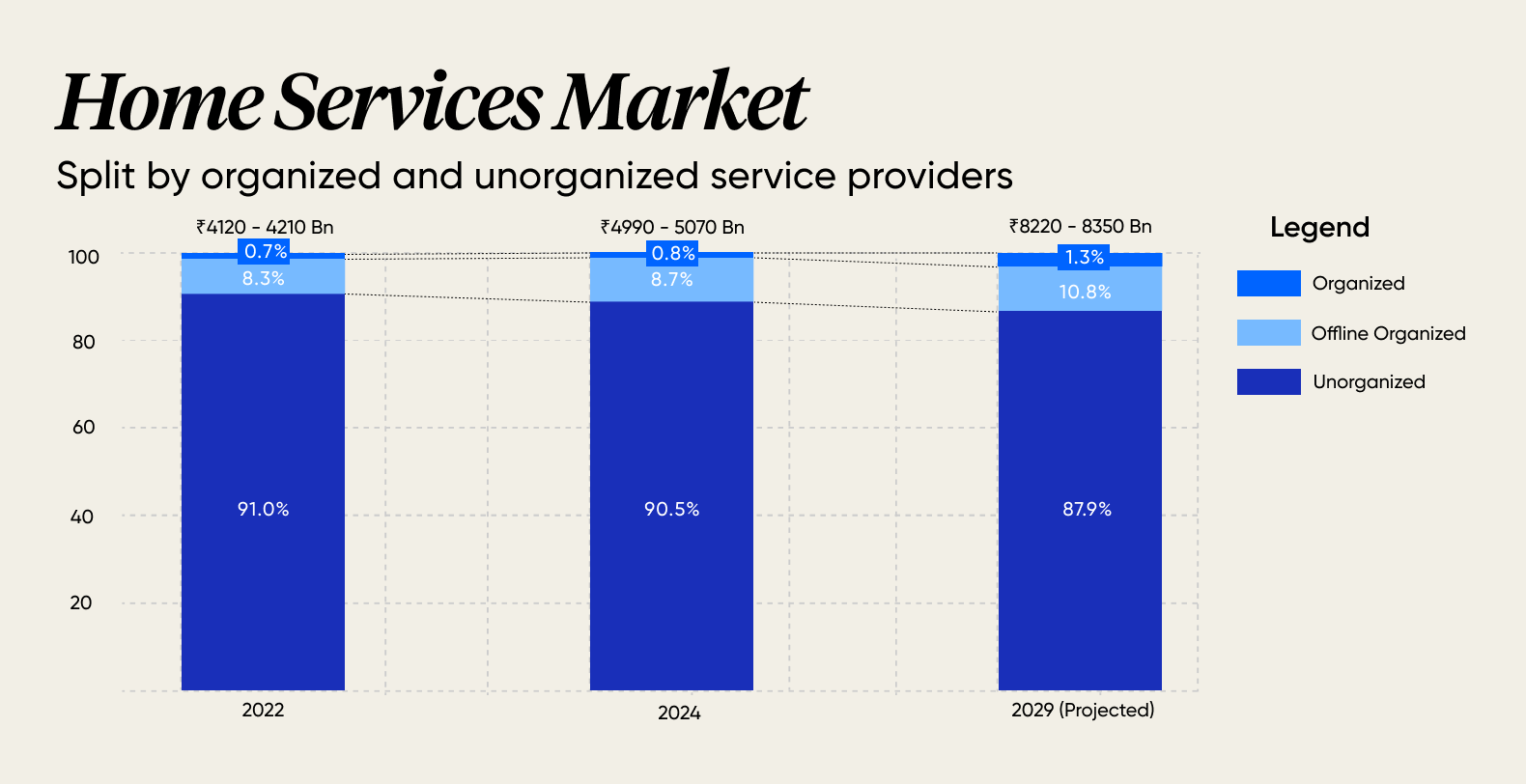
Here’s a representation of the home service market in India as of 2024.
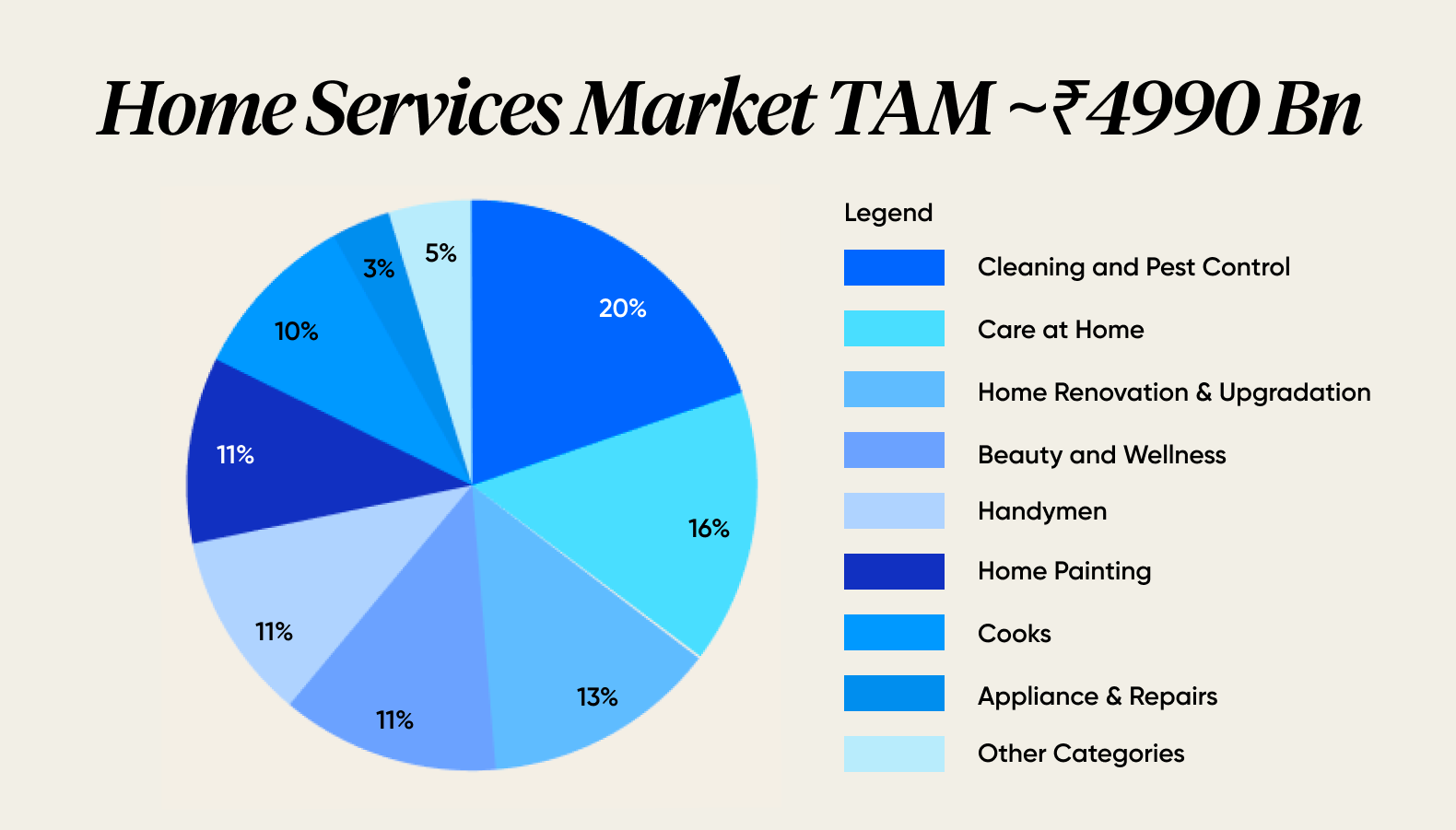
The Cleaning and Pest Control alone constitutes a ~₹990 Bn market. That’s huge, greater than any other at-home service in the segment. Reason?
Domestic labour is cheap, and the market is largely unorganised.
So, the demand cuts across income lines — both middle- and high-income households in India rely on house helps. The difference is in how much.
High-income groups hire for more tasks, multiple times a day. Middle-income groups stick to the essentials, and for deeper cleaning? They save it for festivals and big occasions.
That’s the high-demand signal, home services startups like Snabbit and Pronto are going after. The opportunity is real. Crack efficient, affordable cleaning at scale, and customer trust follows naturally, opening doors to higher-margin services.
But Urban Company has a different reason to capture the cleaning market.
Why is Urban Company entering cleaning?
Look at the range of services Urban Company offers in 2026.
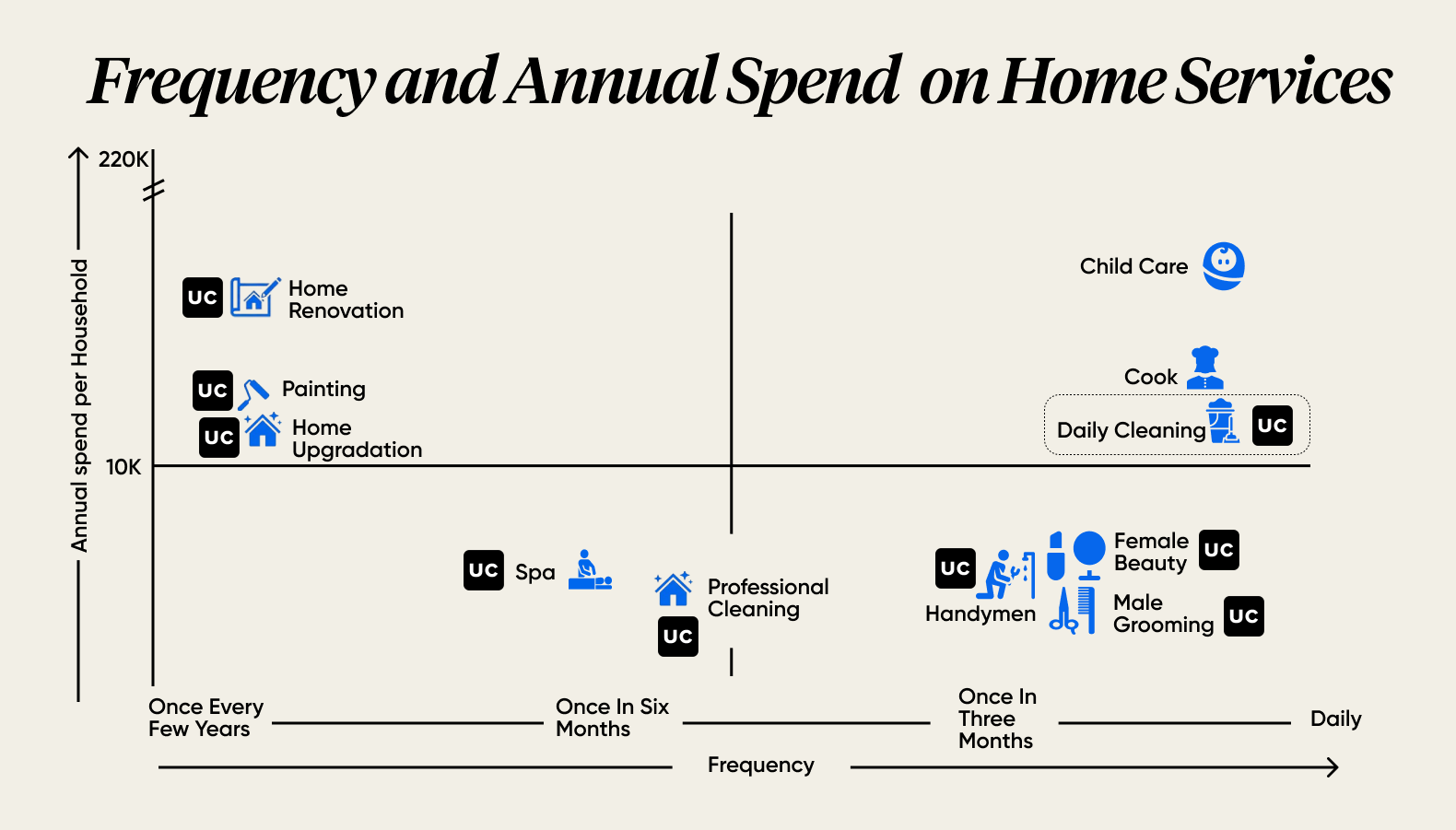
They’ve built what most incumbents only dream of — a horizontal home services business spanning nearly every category. In 2025, they had ~6.5 Mn annual transacting customers, with ~82% of Net Transaction Value (~₹2,667 Cr.) coming from returning customers. The presence, the profits, the loyalty — it’s all there.
Urban Company has the infrastructure, the trust, and the playbook to enter daily cleaning without breaking a sweat. It can control the experience end-to-end as a full-stack, schedule-based service platform. The company has expanded to every segment it owns today following this playbook. Besides, entering daily cleaning could expand Urban Company’s user base.
Daily cleaning is a high-frequency category. So, customers interact with the product constantly. More touchpoints mean more chances to get the experience right. And a good experience could turn a cleaning customer into someone who books a repair, a massage, or a salon visit.
Good experience → stickiness → curiosity → new business.
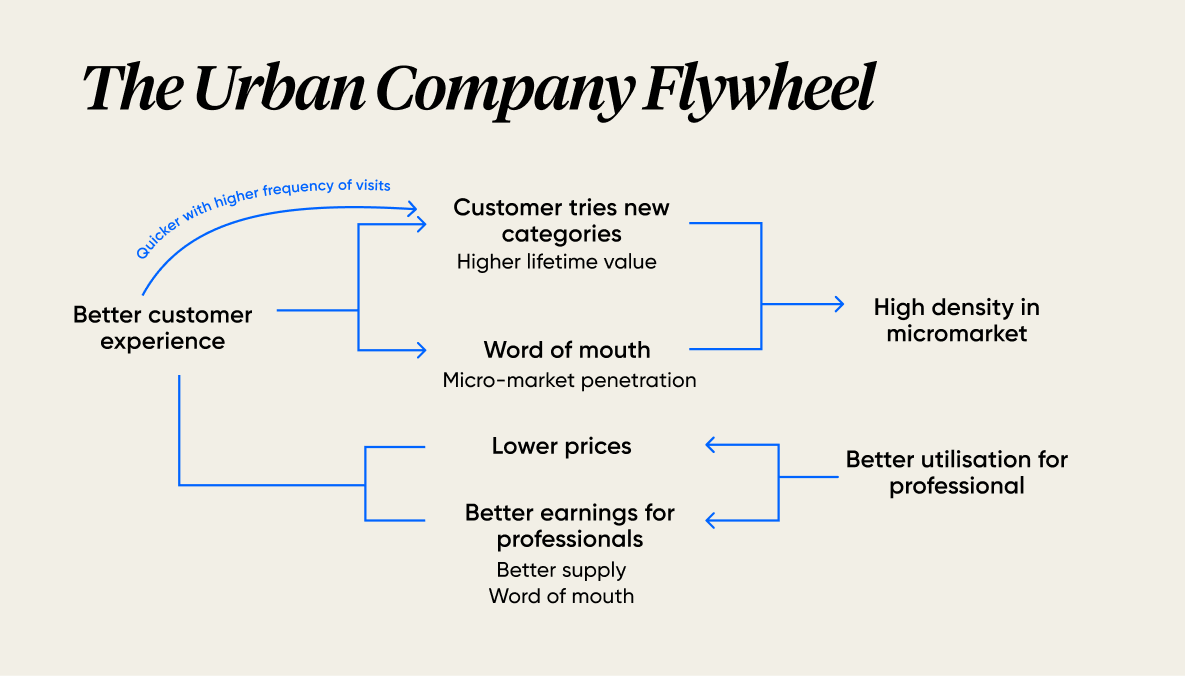
So, instead of following the repeatable playbook — scheduled services, why is Urban Company moving to Instahelp?
Effects of quickification.
It started with Grofers promising 90-minute grocery deliveries in 2013. Dunzo followed, bringing the dark-store model with it — platforms that buy and stock inventory before you even check out. E-commerce giants caught on. Then COVID hit, and India moved online almost overnight.
Soon enough, Swiggy launched Instamart. Then, Zepto emerged. 10-minute delivery stopped being a gimmick and became the baseline.
In 2026, cleaning service platforms are using this behavioural shift as a wedge for disruption.
The idea is sound. Customers already expect speed — so give them that. Then, do it right and deliver consistently to build trust. Simple in theory. But there’s a catch. Supply of service professionals.
Why is solving supply hard?
100% fulfillment needs excess supply.
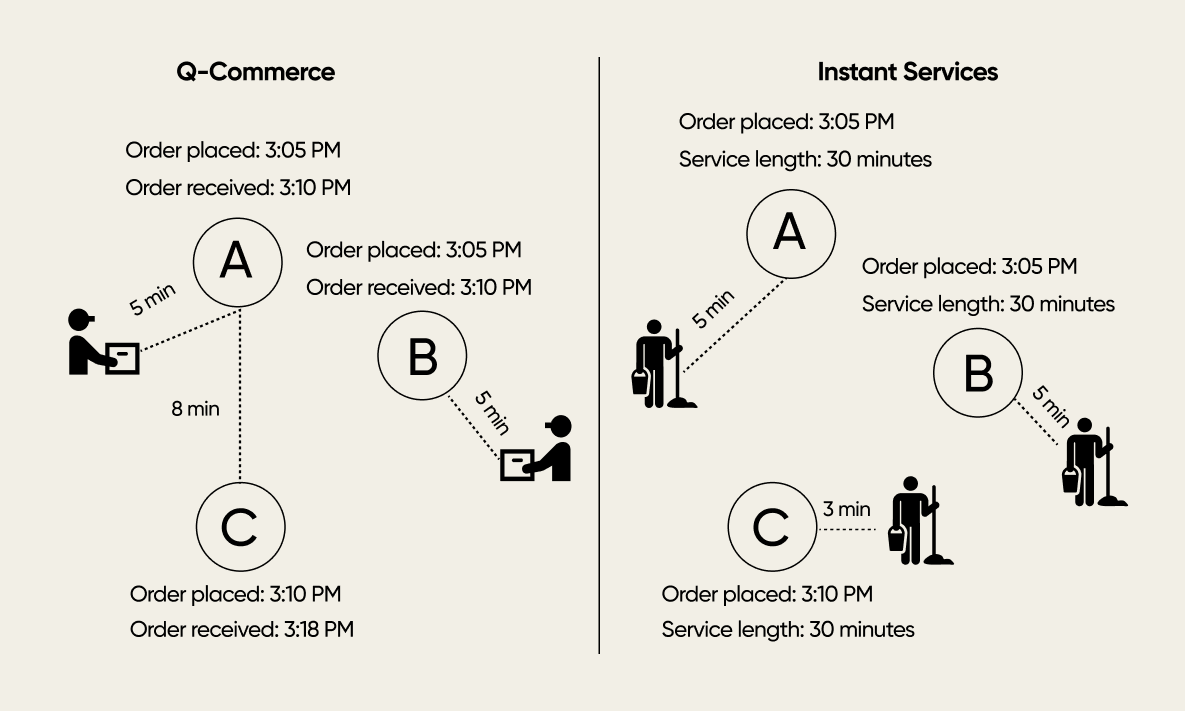
Let’s compare service professionals on InstaHelp to delivery professionals on, say, InstaMart. And let’s assume the demand for both these services is the same, and both platforms promise 10-minute delivery. Here’s a visual representation of how it would work.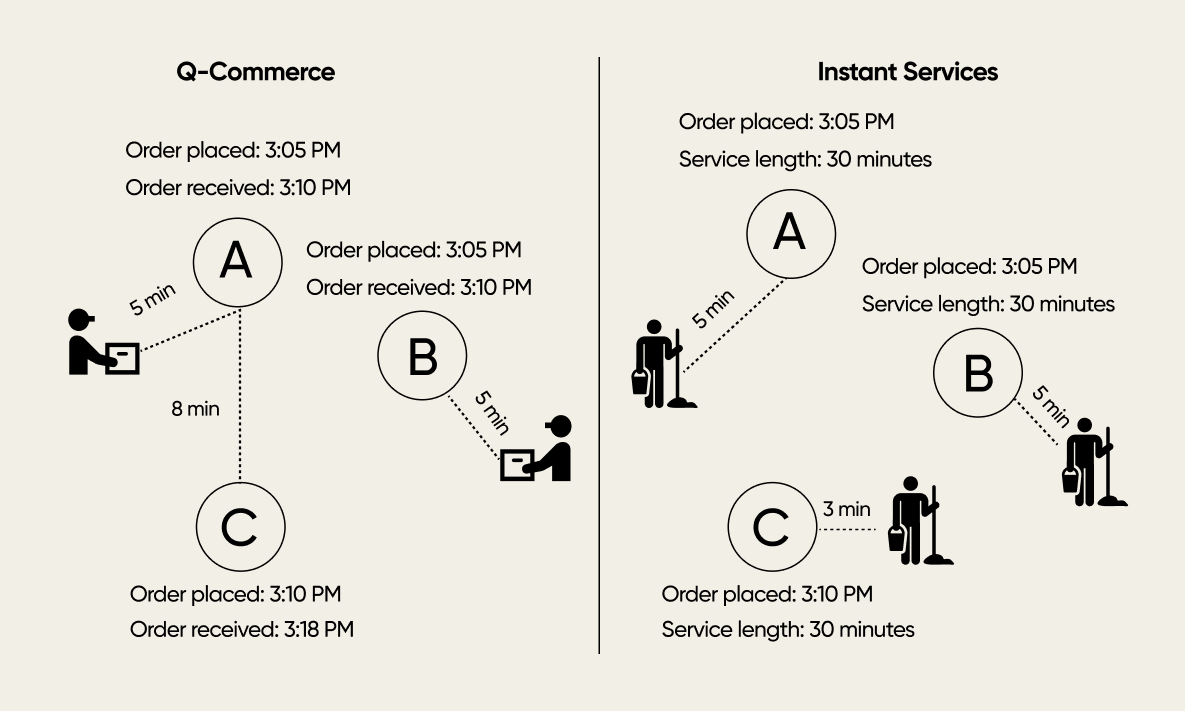
While 2 professionals can manage demand in quick commerce (q-commerce), instant service would need 3 professionals for the same period.
Finding on-demand skilled service professionals is hard.
Service professionals in the home services segment operate largely in an unorganised fashion. No protocols, no set standards of work or income, no labour protection. But professionals get extreme control over their time. That matters.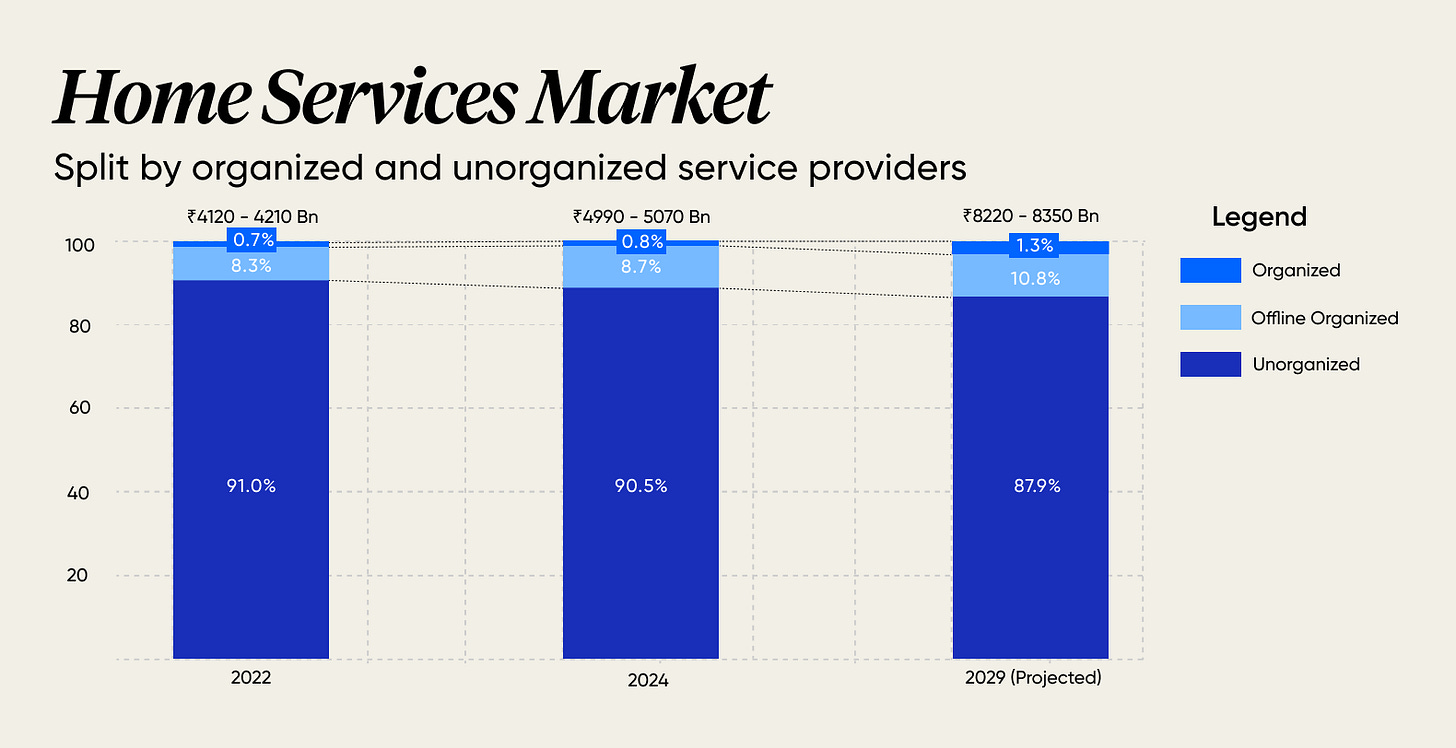
Urban Company DHRP Most domestic workers in India are women with families. Domestic work comes AFTER looking after them. They operate as individual entrepreneurs, setting their prices and work hours based on need and location.
When a platform asks them to be available on demand, it's asking these workers to give that up. Plenty won’t, even for double the salary. For reference, an independent domestic worker earns around ₹15,000 a month, while a platform service partner can earn ₹30,000.
The alternative? Pick service professionals from the 10% crowd or hire unskilled professionals and train them — both extremely high-cost activities, given the higher salary expectations and training expenses.
How does Urban Company make InstaHelp work?
Mass-training campaigns
It’s the only way they’ve been able to retain a returning consumer base. Think about it.
Customers need to trust the platform before they’ll keep coming back, let alone try a new service. In this business, that means promising the same quality of work, regardless of which professional shows up. The way to ensure that? Mass-training.Service professionals enter Urban Company’s network through two routes: from the organised sector, or hired as raw talent through local scouting campaigns. Think job fairs, neighbourhood banners, and localised ads.
The ones who make it through are trained in dedicated classrooms by ~339 super professionals — masters of their craft — across 17 service categories. Unskilled hires go through 2-3 months of hands-on workshops. Even experienced professionals get re-trained.
Cost? Roughly ₹65,000 per employee.The matching algorithm.
In the instant-help space, speed matters as much as quality. Urban Company needs to match you to the right professional — fast, and on their terms too. How does it do that?
The micro-market strategy.
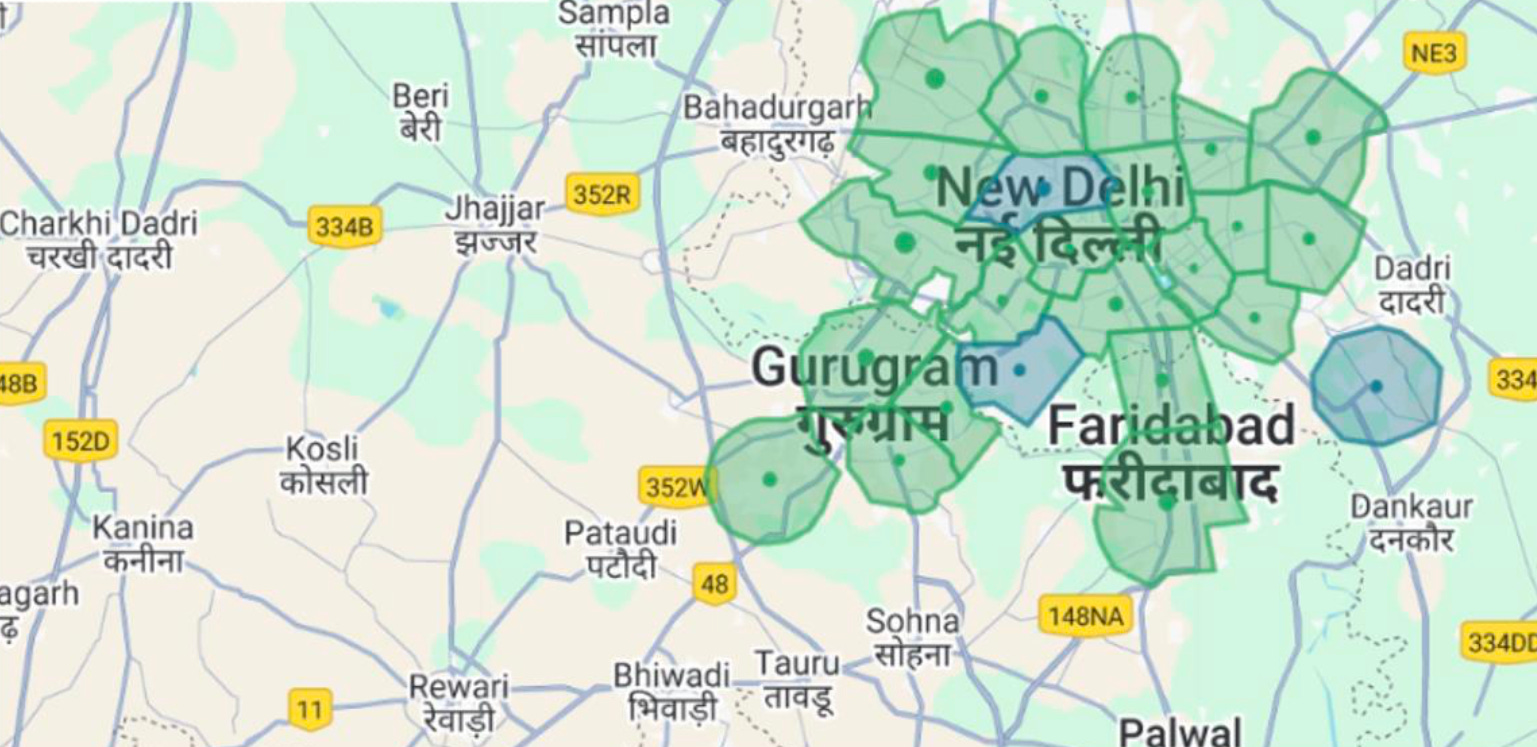
It’s essentially assigning professionals correctly to service a high-demand area in a 3-5 km radius. The idea is to minimise service professionals’ travel time, so that they can deliver the service quicker. Here’s what a micro-market looks like for reference.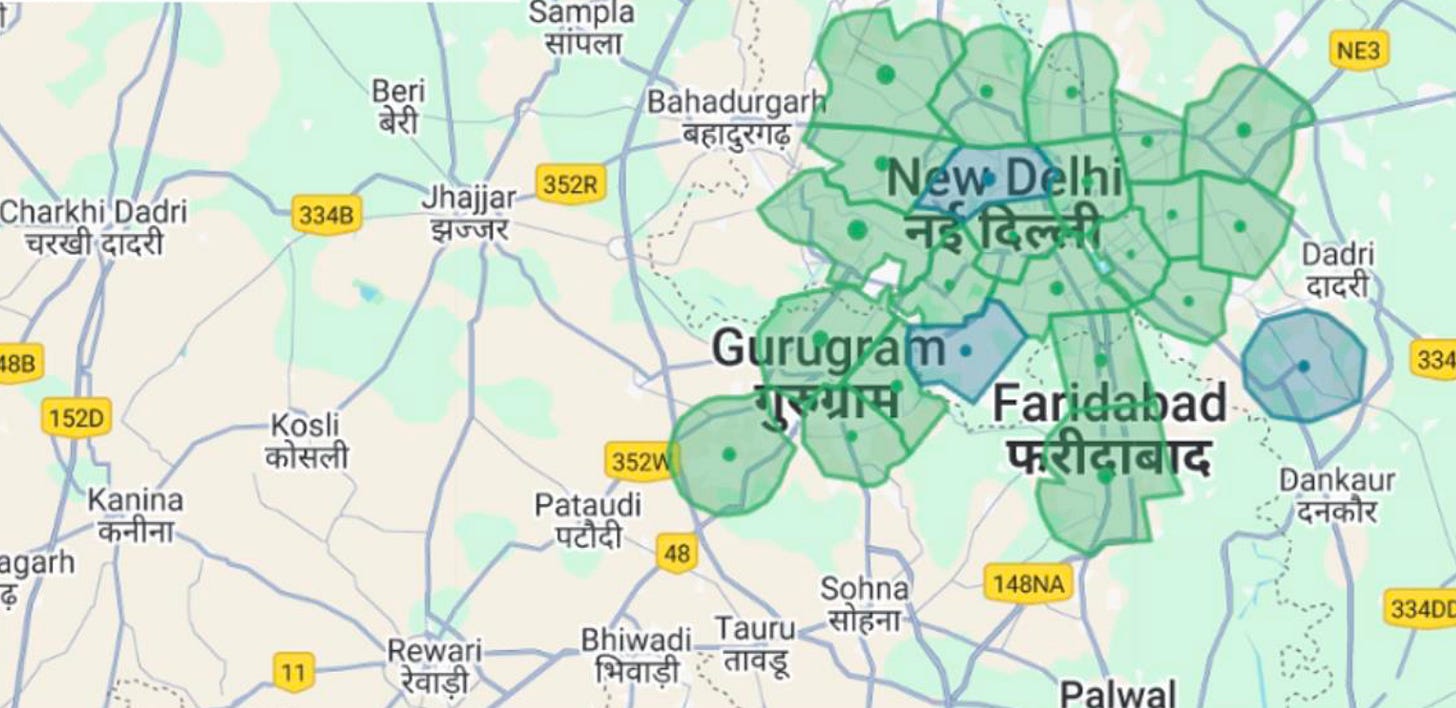
Urban Company DHRP. Now, service professionals might not be available within a 3 km radius everywhere. How does Urban Company service those areas, then?
By using a demand forecasting algorithm.
Here, the system predicts demand in micro-markets based on past demand. Then it assigns service professionals to stand by in those areas. So, when a new request comes in, a service professional is available to handle it. But don’t professionals lose time waiting for a request to come in here?
Yes, and that’s why the company is working to optimise its algorithms to better skill-match and balance service professional supply in real time. Most importantly, they’re working to hire more professionals.Heavy-handed discounting.
Every player in the space, including Urban Company, relies on it for customer acquisition. The platform that cracks the right service-discount ratio wins.
Currently, Urban Company finds discounting easier. The business has multiple revenue streams, unlike Pronto or Snabbit that rely on VC funding and business model development to cut costs. Urban Company, at this point, doesn’t need to do both.
Plus, when demand standardises and the competition vanishes, Urban Company can always increase costs and recover its margins.The MyGate partnership.
In 2022, Urban Company partnered with MyGate — giving it direct access to ~5 million users through a single integration. Book a service on MyGate, get an Urban Company professional.For InstaHelp, the benefits are obvious. Cleaning is a service virtually every MyGate user needs. That’s not just an acquisition channel, it’s a captive market.
What’s next for InstaHelp?
Urban Company is still figuring out InstaHelp’s unit economics in 2026. So far, it has managed to cut losses from ~₹760 to ~₹381 per order by optimising micro-markets, reducing idle time, and managing discounting.
The company expects to reach EBITDA break-even by FY31. But will its business decisions enable that? We’ll keep you posted.