

This business will outlive wars.
The uncomfortable truth behind the USA's defence industry.

Before we begin.
Most builders don’t quit because they can’t build. They quit because they get stuck — and stay stuck. So we did something about it.
Every week, we bring GrowthX members together for buildathons. You walk in with an idea. You get put in a room with other builders who are figuring it out just like you. You get the tools, the frameworks, and real-time feedback on what you’re making. Eight hours later, you’ve shipped something.
The GrowthX fam has already built 100+ projects at our buildathons. Sound like something you’d want to join?

Today’s edition.
They say that you can’t serve two masters, especially in a war. That’s only partly true.
In 2011, the US bombed Libya. Muammar Gaddafi fell, and the US offered $900 M to fund the replacement government. At the same time, they supplied military equipment to Egypt, a country that actively uses the weapons to destabilise Libya.
Then in 2015, the US made arms deals worth over $54 M with Saudi Arabia and the UAE to counter extremist groups in Yemen. Around that time, the Pentagon lost weapons and equipment worth over $500 M. Reports later suggested those weapons ended up with the very same Yemeni extremist groups.
Two conflicts. The US meddled in both, fracturing peace in the region. Their arms deals, however, held up just fine.

Wars change. The arms dealer doesn’t.
The USA is the largest supplier of weapons, contributing to 42% of the global arms exports. What’s crazy is that some reports even suggest that 2 out of 3 armed conflicts have at least one party backed by the United States. The figure below shows us how that works.
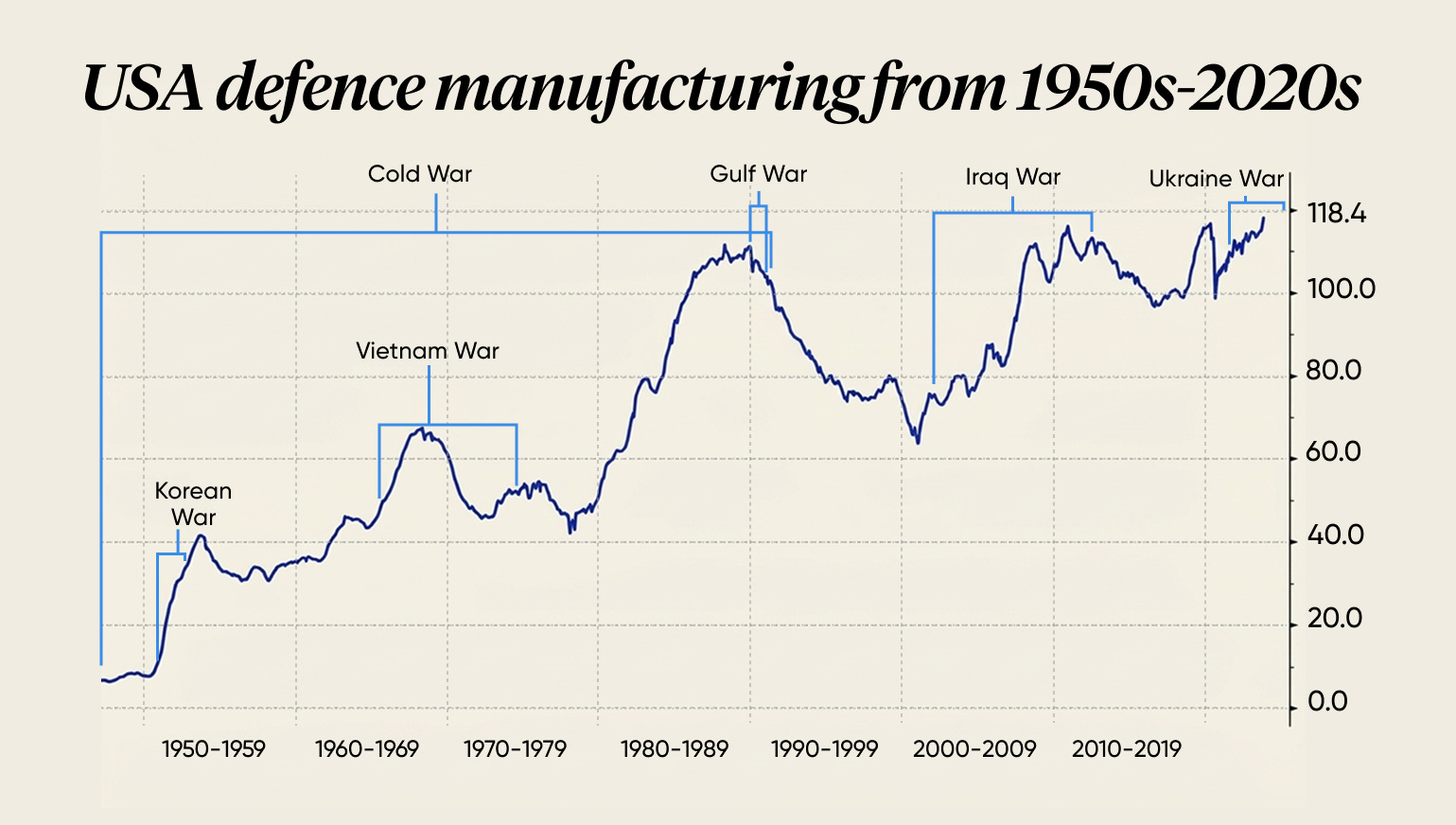
Long story short, every time there’s a war, the number of weapons coming out of the USA shoots up. So, more wars = more weapon sales = more profits.
But what happens when the wars stop?
Demand never dies.
Imagine you’re China for a second.
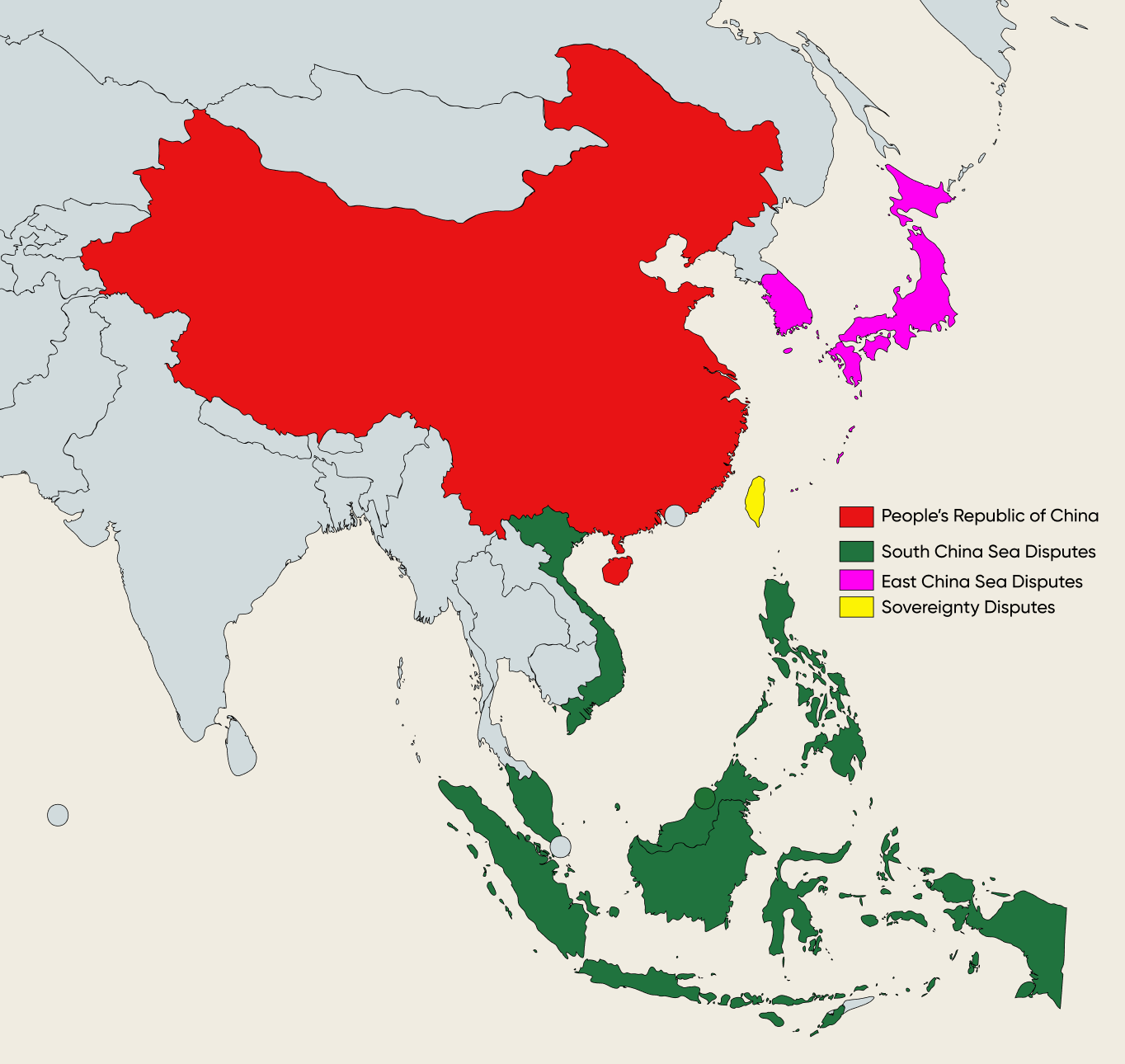
You’re surrounded by competing powers on nearly every side. Say, tensions rise in Taiwan. You’ve got to do two things: manage tensions near the Taiwan border and secure your other borders so that neither India nor North Korea exploits the distraction.
Imagine you’re India, now.
You see that China is upping border security. There are new soldiers, and they’ve got weapons. You don’t know why, but you can’t risk finding out. Your only choice? Match them.
It’s a delicate dance every country engages in — have just enough weapons to not start a war. It’s also why the demand for weapons never stops.
Why don’t nations make their own weapons?
Making weapons in-house is terrible for the economy.
The cost of development is extremely high. Countries would need to cover massive R&D and production costs, and have a supply of technical experts to set up their weapons industry. And even if they manage that, weapons manufacturing won’t grow the economy.
Think about it. If a country’s existing weaponry helps it avoid conflict with competing powers, nothing happens. No wars, no destruction — but also no measurable return on everything spent. The money is gone with nothing to show for it.
But if there’s conflict, the demand for weapons rises. On paper, that looks great. The government pours money into defence, factories run, workers get paid, and the economy moves. But the weapons get used up. Meaning the government now needs to spend more money to build up reserves — not to grow, just to get back to where it started.
That government money could have been used to grow the economy anywhere else. Building a school, for instance, could produce engineers, doctors, and entrepreneurs for the next fifty years. They would build companies, develop new technologies, and train the next generation. The same isn’t true for the weapons industry.
European countries know this well.
It’s why they consistently underinvest in their militaries. Instead, they lease protection from the US through alliances and treaties. So far, it’s worked.
Why does the USA keep making weapons?
The USA has figured out that it can use weapons as resources. The country today routinely trades weapons for friendships, alliances, stability, protection from enemies, and vital resources.
Plus, selling weapons keeps the USA’s GDP growing.
In 2024, aeronautics and defence (A&D) contributed 1.5% to the USA’s nominal GDP and accounted for 1.4% of total US employment. For context, A&D exports alone hit $138.6 B.
The USA has integrated the weapons industry into its economy so deeply that it can’t do without them. And so, weapons keep getting made, sold, and used.
How did the USA get here?
Take a look at the image below. None of these wars were fought to defend the USA’s territory.
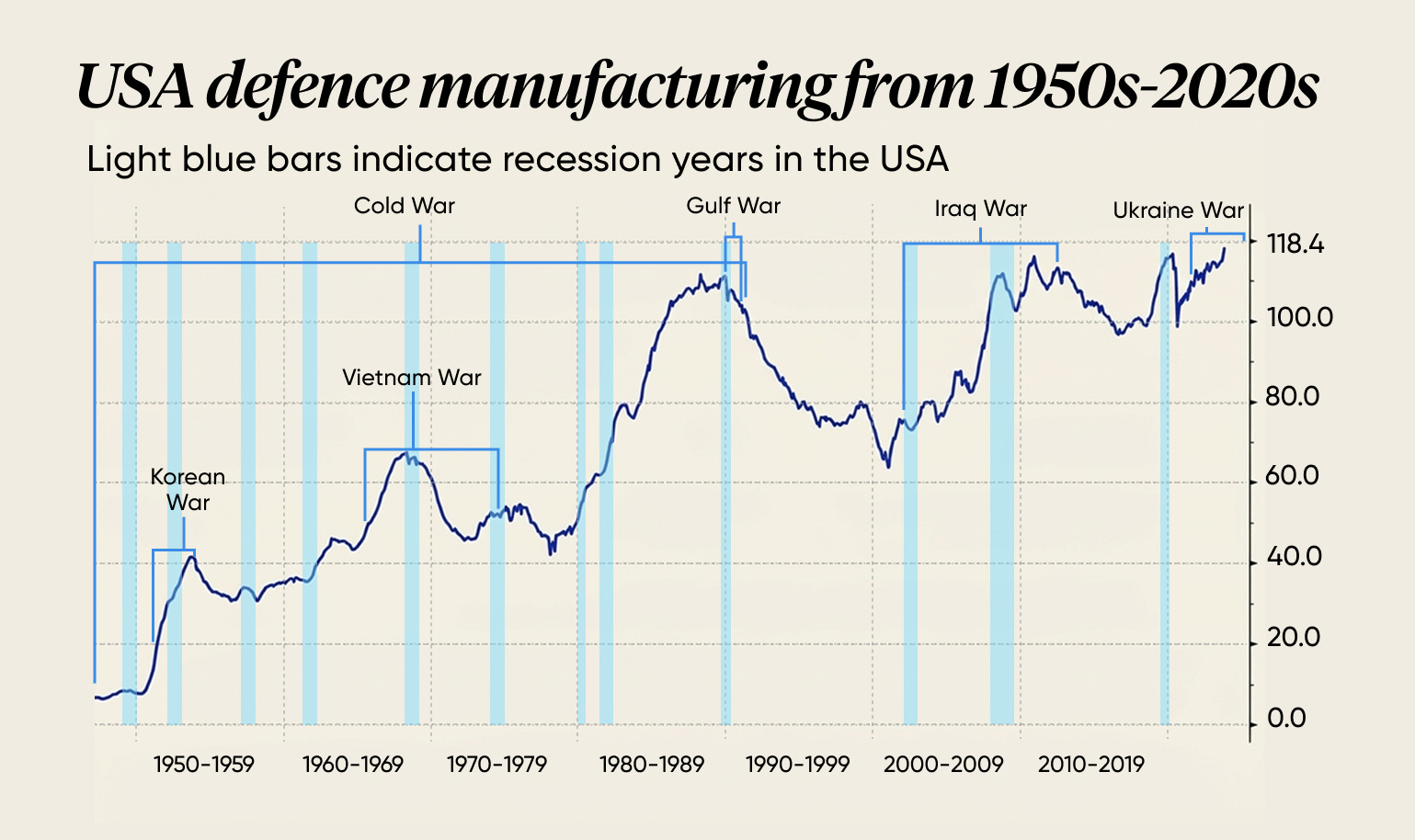
Yet, weapons manufacturing grew during that entire time. To understand why, we’ll need to go back to the 1940s.
During World War II, the US converted peacetime factories into weapons manufacturing units. As the war dragged on, businesses saw the returns. Dozens of new players emerged, and the industry boomed.
Eventually, World War II ended — but the weapons industry didn’t slow down. The US continued building its arms reserves, anticipating an inevitable confrontation with the USSR. Then the Cold War ended, too, and with it, the bottom fell out. US military spending dropped sharply, and the weapons industry faced an existential question: What now?
The Department of Defence stepped in. It began reimbursing restructuring costs to encourage smaller firms to merge with larger contractors, while enabling the production of dual-use civil and defence technologies. The goal was to consolidate the industry rather than let it collapse.
It worked. That consolidation gave rise to five dominant defence contractors: Lockheed Martin, Boeing, Raytheon, Northrop Grumman, and General Dynamics.
The rise of privatised weapons contractors.
Given the context we have, it doesn’t make sense. Why would private players want to enter a space with low demand?
Here’s what happened.
Once the Cold War ended, there was a demand for a New World Order — international law over violent conflict. So, wars between the major powers ended on paper. Global powers disarmed, and militaries sized down. But regional conflicts persisted.
Any country that wanted to enter these regional conflicts couldn’t do so directly without violating the very international law they’d just signed up to. And even if they could, large standing armies weren’t built for this. Regional conflicts were messy, fast-moving, and deeply local. War-trained soldiers, drilled for large-scale conventional warfare, weren’t equipped for that kind of adaptability. Neither were the weapons they carried — everyone had access to the same Cold War stockpile.
This is where private military contractors (PMCs) and private manufacturers flooded the market.
They absorbed the post-Cold War weapons stockpile and upgraded it for regional conflict. They also absorbed something else — thousands of unemployed war veterans with nowhere to go. Those veterans would go on to form armed squads, available for hire in the regional conflicts that governments couldn’t enter themselves.
The cost of sophisticated weaponry.
Between 2020 and 2024, the USA handed ~$2.4 Tn to private military contractors.
The USA commissions these contractors to build the arms it needs. The work involves complex experimental technology whose costs are nearly impossible to predict up front. So, the US uses cost-plus contracts — it guarantees payment above production costs, ensuring firms take on contracts they’d otherwise consider too financially risky.
Sounds like the perfect solution on paper. But it’s also why defence budgets keep ballooning.
Think about it from an arms manufacturing contractor’s perspective.
The government asks you to build a sophisticated weapon. They don’t know what it should cost. And they’ve already agreed to pay you whatever it takes, plus a fee on top. Would you give a conservative production cost estimate? And would you rush to finish it? Exactly.
The incentives work. And that’s the problem.
Private arms manufacturers aren’t doing anything a normal business wouldn’t do. They’ve already figured out how to be profitable. All they must do is find a way to keep the profits coming.
Keeping warlords fed.
The warlords (private arms manufacturers) remain profitable only as long as the arms demand persists. So, it’s in their best interests to keep the demand for arms high.
The concept is simple. Back the right politicians, influence the right officials, and the contracts keep flowing.
In practice, that means two things — funding senate campaigns to get war petitions and arms deals signed off, and hiring lobbyists to push contracts through.
Private arms manufacturers do both. They spend roughly $150M on lobbying annually. That’s approximately two lobbyists per elected official.
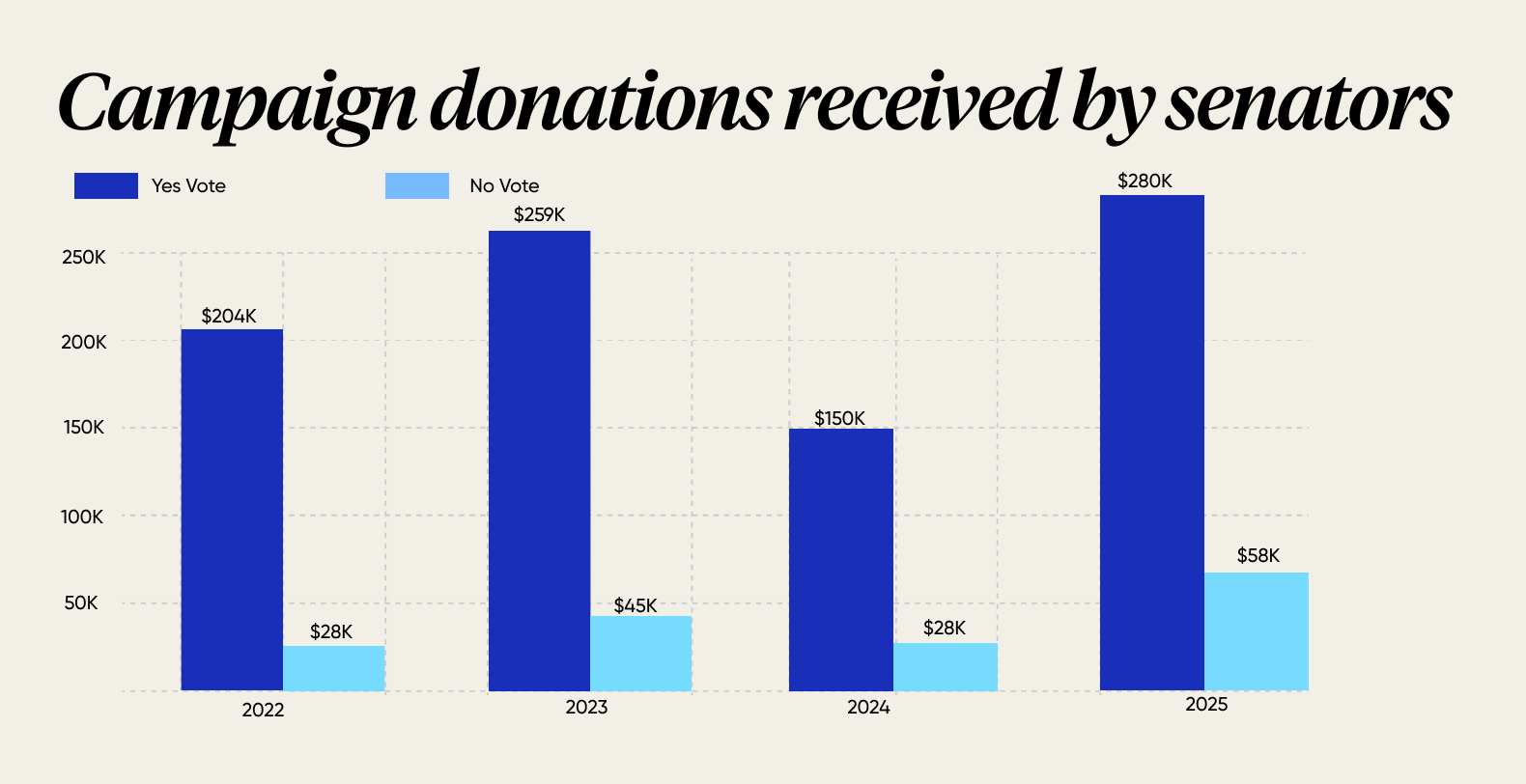
But the money is only half of it. The conflict of interest runs deeper.
Elected officials frequently end up at private arms manufacturers after their terms. A Defence Secretary retires and joins the board of Raytheon. A four-star general leaves the Pentagon on Friday and starts consulting for Lockheed Martin on Monday. In the decade after 9/11, over 70% of retired senior military officials went on to work for defence contractors.
What’s next for the US arms industry?
The USA’s military budget just rose from $896B to $925B. But according to Emil Michael, acting director of the Defence Innovation Unit, more money alone won’t fix what’s broken.
Risk sits with the government, not the industry, in the current model. And the signals telling manufacturers what the military actually needs are unclear at best.
What the Pentagon wants to move toward is different. Less bureaucracy. Clearer demand signals. Shared risk between the government and contractors. And a simpler way to do business.
The focus is shifting, too. Away from complex weapons and toward war intelligence warfighting — logistics, assets, operations, simulations. This opens the floodgates for new players to enter and more inventive players to compete.
But will the system actually reform? Only time will tell. We’ll keep tabs until then.
Whats on the y axis on the graph that has been displayed twice?