

OpenAI's device, the Nvidia backlash & Humane AI pin that doesn’t su*k.
AI's been interesting lately. There's a lot to unpack in this edition.

3 kicka*s events this week.
’How investors evaluate AI companies in 2025’ with Vaibhav (Founder & CEO, Better Capital) (tickets), ‘Cracking 0-1 US GTM via cold outbound’ with Avinash (tickets). ‘In her element’ with Astha. Plus, two more events this week.
The ‘new’ OpenAI device.

Some context.
OpenAI acquired Jony Ive’s AI hardware startup, io, for $6.4 billion in May 2025. Then on Nov 24th, they announced that their first AI prototypes were ready.
Why is it a big deal?
Jony Ive has designed some of Apple’s landscape-defining products, including the iPod, iMac, iPhone, and the Apple Watch. His new AI hardware startup io, by extension, follow’s Jony’s design aesthetic and philosophy.
OpenAI (with one of the largest AI userbases in the world) will finally enter the hard-to-crack hardware space with the io partnership.
The company is reportedly working on an entire family of AI-native products, including smart glasses, a voice recorder, and a wearable pin. And rumours suggest OpenAI is partnering with Apple’s China-based suppliers Luxshare and Goertek for manufacturing.
Wait, why is OpenAI entering hardware?
Sam Altman (CEO, OpenAI) says it’s because the space has been ‘stagnant’ for a while. For perspective, the world’s most adopted device is still a smartphone. But thanks to AI, companies can innovate in the space, like make broad-function screenless devices and create new audio-visual device formats.
But there’s a bigger business reason behind this.
OpenAI isn’t profitable despite mass adoption. In fact, it loses $1.69 for every $1 it makes in revenue — thanks to massive investments in chips and data centers. And Hardware push is the probable solution.
With hardware, OpenAI does two things.
It sells a new physical product to its user base. Plus, it opens up a new distribution channel for its apps. And it gets more user interaction-based data from the device.
Nvidia doubters are piling up — fast.

Some context.
Nvidia started the November with the highest stock price in history $206.88. And then the company saw a 11% drop in value because Google and Meta started making their own chips. Both SoftBank and Peter Thiel cashed out their shares during the same period. And the company has been battling investor allegations of creating an AI bubble, ever since.
Why is this a big deal?
In mid-2025, Nvidia reached a market capitalization of $4 trillion (higher than any other company in history!) thanks to the AI boom. It’s also the largest AI chip manufacturer in the market right now — hyperscalers like Google, Amazon & Microsoft buy chips from the company. But ~75% of Nvidia’s gross margins also comes from the hyperscalers. Meaning, if they begin producing AI chips inhouse, at scale, Nvidia could face major losses.
Nvidia’s escape route also has skeptics.
The company is diversifying it’s market by investing in next-generation cloud providers like CoreWeave and NeoClouds. The problem? These companies don’t earn a lot of profits.
So, it looks like Nvidia is inflating its chip sales by selling to unprofitable companies on paper. That’s a lot like Enron Corporation. (Enron was accused of hiding losses through accounting fraud. The company created special purpose entities to shift debts off its balance sheet, manipulating accounts to appear more profitable than it was). That’s why investors suspect foul play.
Nvidia shuts down these allegations in a recent statement to investors.
The company maintains that both its own balance sheets and those of its portfolio companies are public and transparent. Time will tell what the future unfolds for the chip giant.
Humane AI pin that doesn’t su*k.
Some context.
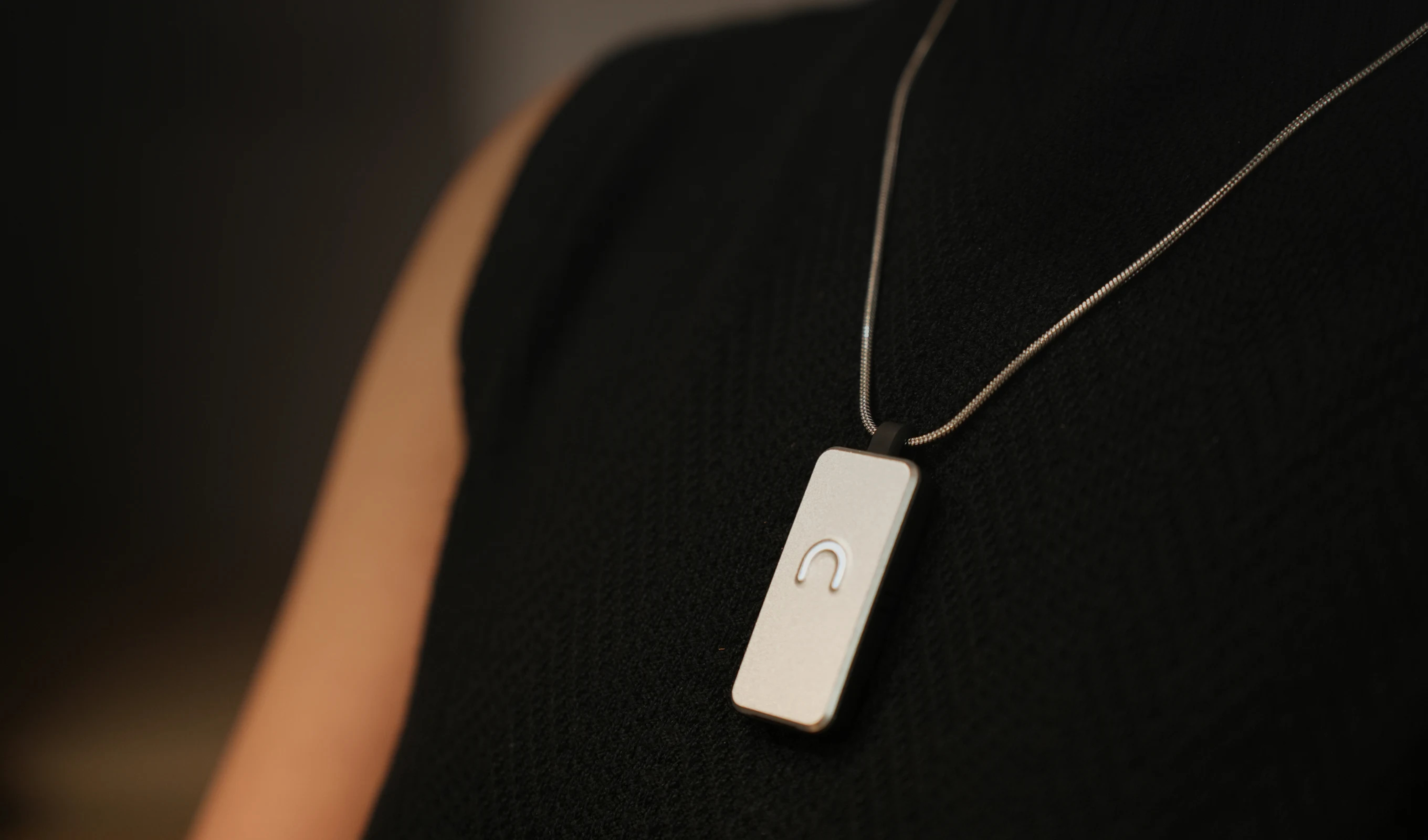
The Humane AI pin launched in November 2023, as a fully functional AI device in a non-traditional form factor. Everyone hated it. Then late last year, a Pune-based launched a wearable AI pendant. And looks like a lot of people love it.
What did Humane AI pin do?
The pin was screenless, allowed ambient and contextual AI interactions, had an AI-first operating system, and was privacy-first. It might have even been ahead of its time—it used projectors for display, ran on any popular LLM instead of apps, and was privacy-first by design. But it didn’t work well.
The interface was awkward (people weren’t used to it), the projector was gimmicky (people didn’t use LLMs instead of apps for all tasks yet), the hand gestures were hard to master, and it overheated constantly. To top it off, the pin didn’t integrate with phones or computers, making it impractical as an accessory.
What’s NeoSapiens doing differently?
NeoSapiens is built to be an AI accessory. It does one thing: listens to ambient audio and helps you make sense of conversations. You can use it with your devices to make AI notes, analyze transcripts, identify tone, and remember meeting details. Plus, using it is extremely intuitive.
Most NeoSapiens customers—those who spend the bulk of their day in meetings—love the product and use it every day.
What does this mean for AI hardware?
Solve a specific problem. Humane’s pin tried to replace your phone and change user behavior. It failed. NeoSapiens integrates into existing workflows as a focused tool that solves one problem well.
The use case is clear: professionals forget key meeting points. NeoSapiens acts as a discreet note-taking tool that captures everything, keeps information local, and doesn’t disrupt conversations.
The lesson? AI hardware doesn’t need to be revolutionary. It needs to make one part of your day measurably better.
Over the past few weeks, the community has grown to 5,314 members who come from diverse backgrounds — founders, marketers, product managers, engineers, analysts & more. If you are serious about career growth in this AI world, take the bet.
 | A guest post by
|