


OpenClaw this. OpenClaw that.
Have you built an agent? We tried and stumbled at the first step: hosting.

So instead of figuring it out alone, we’re bringing people together. We’re hosting an 8-hour OpenClaw buildathon, where everything gets handled in one room — finding a problem worth solving, hosting, building the agent, and getting real feedback from people who use the tool every day.
Grab a ticket in your city.
Tickets for Bengaluru Here
Tickets for Mumbai Here
Tickets for Gurugram Here
Tickets for Hyderabad Here
Tickets for Pune Here
Today’s edition.
In our last edition, we explored the business of gold & why the demi-fine segment is emerging as a category. It came down to two things — margins & repeat purchase rates. (All the juicy deets are in that edition. Go check it out.)
But here’s the thing.
Gold-plated jewellery isn’t new. The category had its moment in the early 2010s. Then it faded once the gold prices dipped.
Cut to Palmonas.
Founded in 2022, the brand seems to be building in the same space, with a customer base that reportedly buys from them 3X a year. Those are impressive numbers. But the category’s history raises an uncomfortable question: what happens when gold prices dip again? Here’s everything we learned, condensed into a 7-minute read.
So, what really happened to 1gm gold jewellery?
It all started in the 2010s. Gold prices were on the rise. Incomes — not so much. People had to spend more to buy the same jewellery, and given their income, they couldn’t. The gold jewellery business almost stagnated. So, the jewellers experimented.
The hypothesis was simple.
People buy gold jewellery for the looks — the design, the colour, the shine. So, in theory, you could coat a piece of regular metal jewellery with a thin layer of gold, and it would sell. Good sales numbers. That happened. And then it stopped.
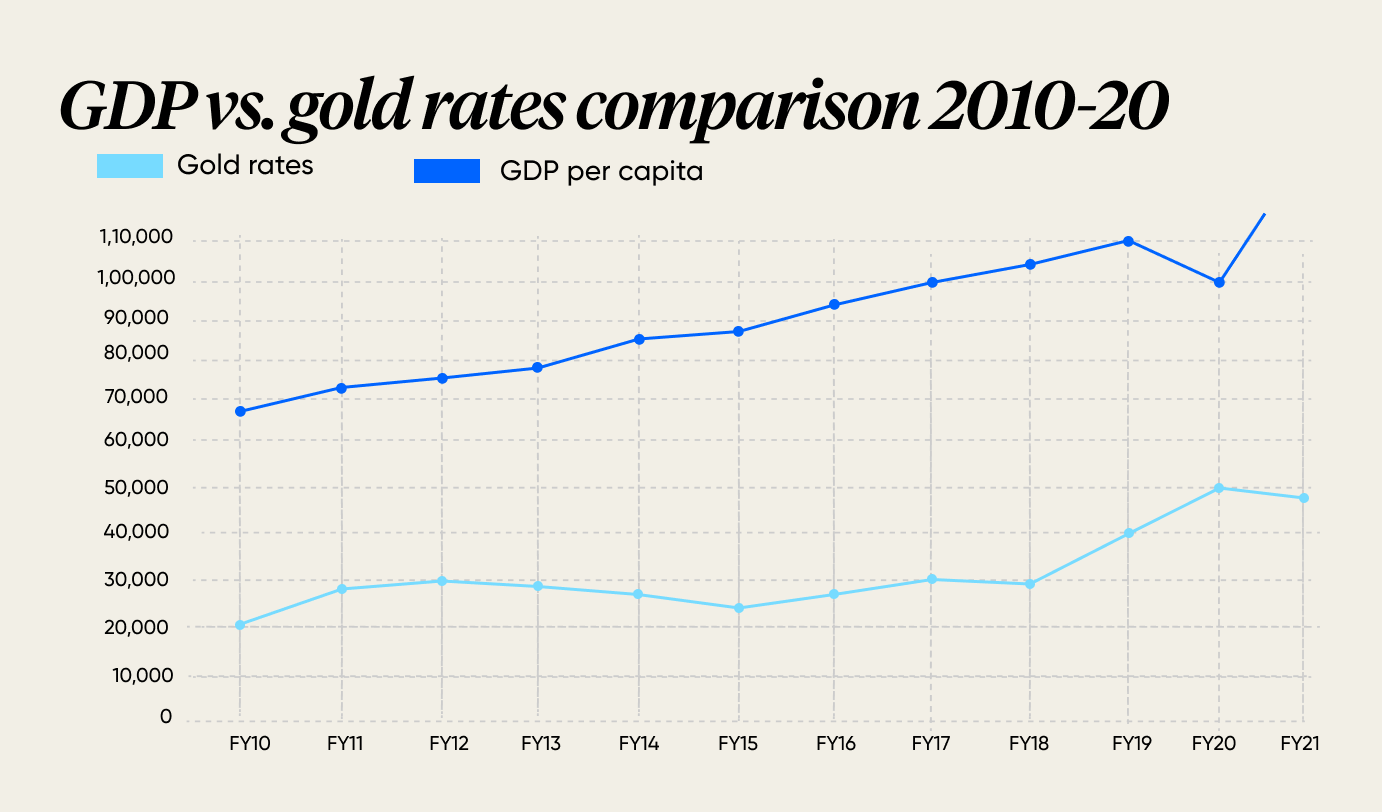
By mid-2015, gold prices stabilised.
So, people went back to buying real gold. But why?
1 gm gold had a marketing problem. Jewellers presented it as an affordable option to the real thing. Except affordability wasn’t why people bought gold.
It was as an investment. Meaning when times were tough you could exchange it for real money. 1g gold jewellery didn’t have the same benefit, given the quantity of gold was negligible. Plus, it is hard to extract. So, when prices stabilized people kept buying real gold. 1g gold continued to be a premium fashion accessory.
Gold-plated = 1gm gold jewellery.
Just better hype.
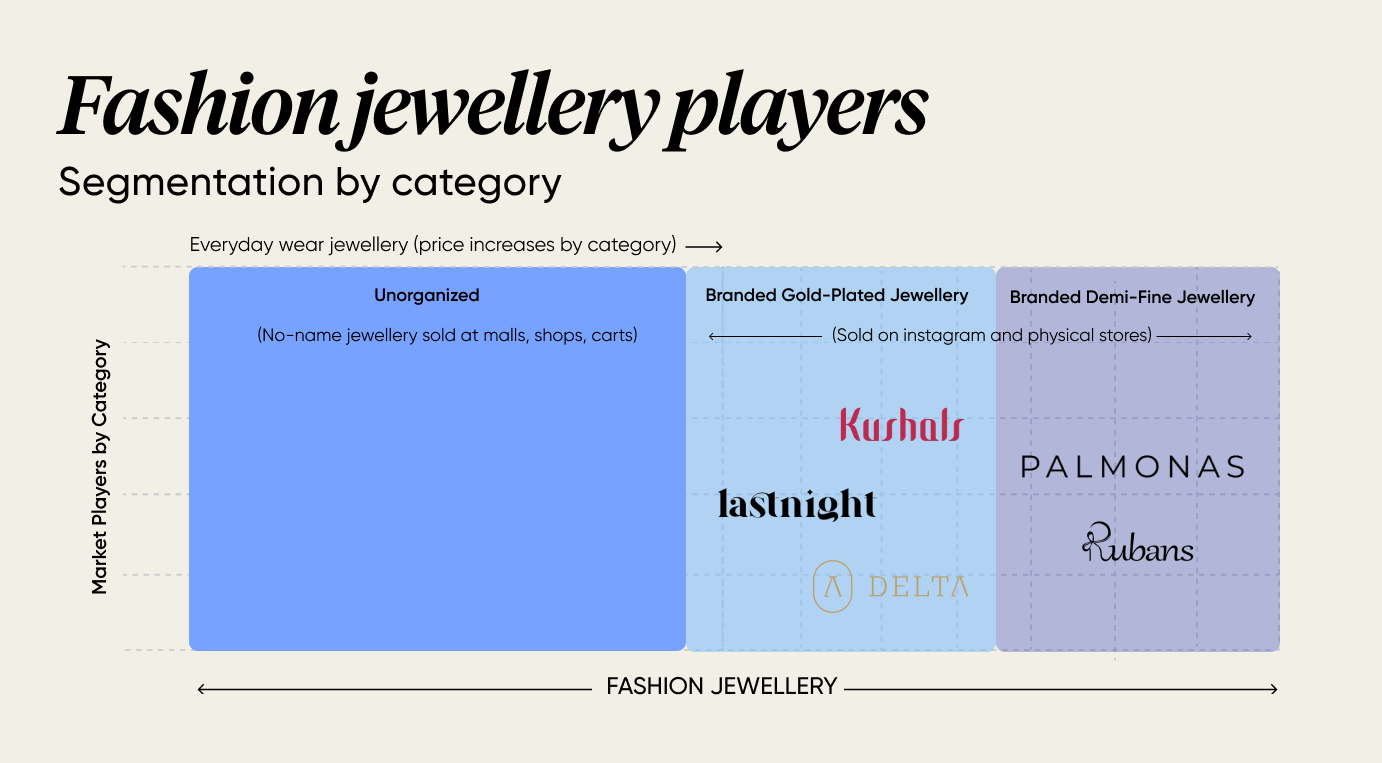
It’s not a replacement for gold jewellery. Rather, the pitch for plated jewellery is this: “Get the style of fashion jewellery with the premium gold finish for a really sweet deal”. Brands and small businesses have figured this out over the years. Here’s a snapshot of the space in 2026 for context.
So, what’s Palmonas’ wedge?
First - a thicker, > 2.5 micron gold plating.
That’s roughly 2X the plating that goes in regular gold-plated jewellery. Double the wear resistance and greater shine.
Second - a huge design catalogue.
Micro-players cannot do this, given the high design, production, and stocking costs. But Palmonas can, thanks to its business model and funding.
Wait, why is having an endless aisle of designs a wedge?
Think about it from a customer’s perspective. You want earrings that complement your outfit for a small function. Where are you more likely to find something you like? A store with 15 options, or a store with 50?
Customers want options.
That’s why Palmonas launched products across a single category simultaneously.
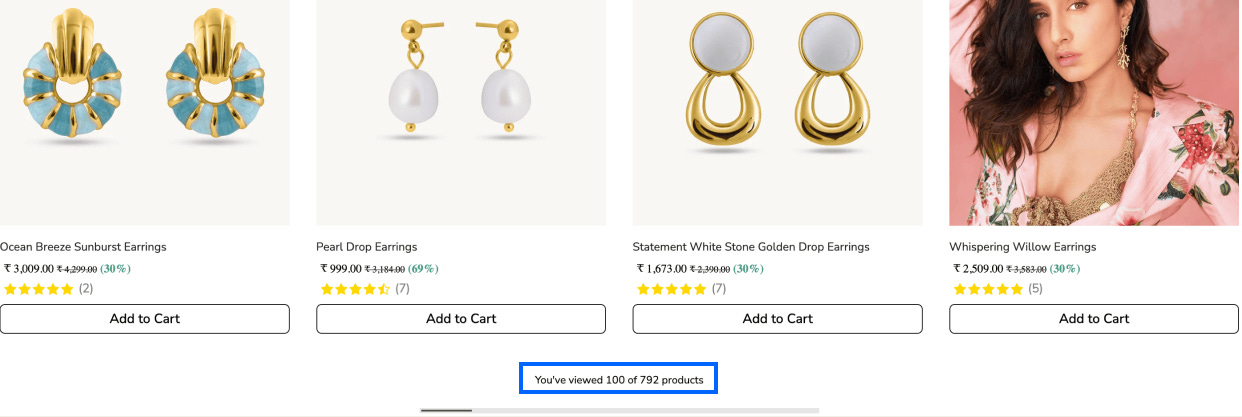
There’s a risk they’re taking: fewer sales. They’d have to find the sweet spot between variety and numbers to ensure all the pieces stocked actually sell. Else they’d spend too much on inventory and holding.
Fine jewellery brands like Melorra often opt for an asset-light model to avoid this. They make jewellery to order using 3D printing, minimising excess stock and inventory holding costs. The process from manufacturing to delivery takes less than a week!
Can you sell when cheap alternatives exist?
Yes. Let’s look at how Palmonas did it.
1. Market education.
When Palmonas entered the market in 2022, gold-plated jewellery was already available. Customers wore it every day and knew that the gold plating would eventually wear off. If they still wore it, they’d likely experience skin irritation, given the low-quality base materials used. The simplest solution? Get a brand-new piece of jewellery when the plating wears off.
Pallavi, Palmonas’ founder, tapped into this core consumer problem and pitched Palmonas as the solution to new consumers. The logic made sense. A thicker coating meant less jewellery replacement. And better base materials meant no skin irritation.
2. Exiting the algorithm trap.
For a new brand, social media is the obvious starting point. The catch? Consistent visibility means chasing an algorithm that never stops shifting. High effort, no guarantees.
Paid ads help, but only when targeting, creatives, and the post-click experience all come together. Pallavi had already figured this out at Karagiri, her previous venture. Palmonas inherited that advantage from day one.
3. The marketing play.
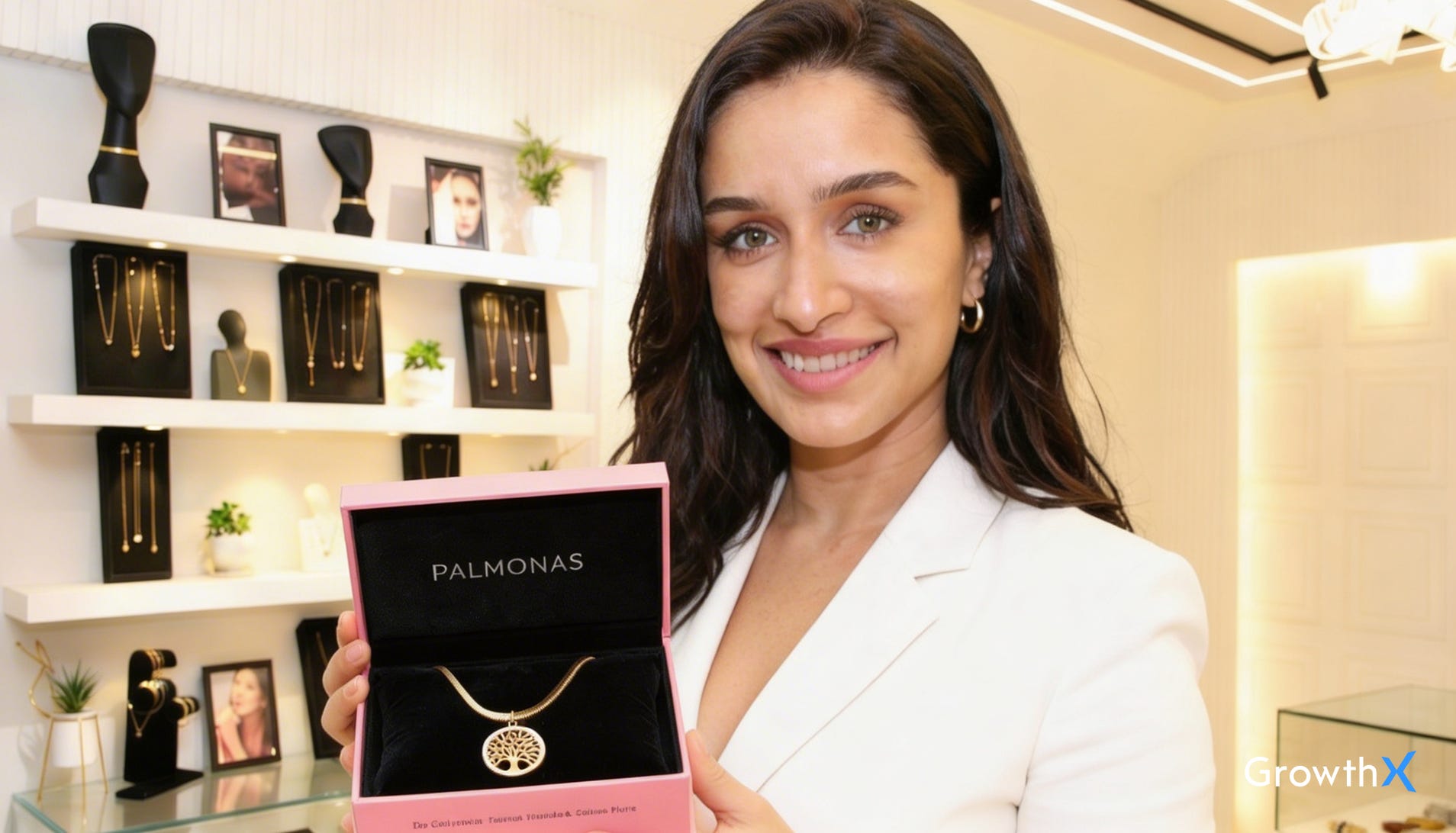
The most obvious trick? Making Shraddha Kapoor the face of the brand. Celebrity association means instant credibility in Tier-2 and Tier-3 cities, and instant visibility in Tier-1. Jewellery brands know this. That’s why Anushka Sharma fronts Giva and Shah Rukh Khan fronts Candere.
Then Palmonas flips the playbook.
They strip emotion — completely. Think about every jewellery ad you’ve seen. They’re always tied to relationships, always tugging at heartstrings. Palmonas? None of that.
Shraddha isn’t a distant celebrity ambassador.
She promotes sales, pushes offers, and talks directly about products. The best part? A lot of Shraddha’s sales posts are of extremely low production quality. At her house, in a lounge, even at PR events. That’s saved marketing spending. And it works. Take a look at this ad.

Customers don’t need an emotional anchor for everyday jewellery.
Why? Because this isn’t heirloom gold. It’s another D2C purchase ~₹1,000 — like skincare or accessories. For this category, marketing needs to stop the scroll and feel relatable. Which is exactly what Palmonas ads do.
4. Offline, on purpose.
Most new-age jewellery brands today start online and stay there. From a purely expense standpoint, it makes sense. Why start offline sales if you’re getting enough orders online? Why incur additional rent, store lease, and employee payments when all of it is practically free online?
Here’s the deal. Most Indians still don’t buy jewellery online, especially the expensive stuff. We want to try it on and see how it looks on us before buying. Some of us want the store simply because we can return it if something goes wrong. Online can’t give us that.
We’ve seen this play out before. Online jewellery brands eventually move offline. BlueStone started online-first but had to pivot offline to survive. Melorra didn’t make the shift in time and is now struggling to stay alive.
That’s exactly why Palmonas expanded offline fast. By mid-2025, they already had more than 25 stores across Bangalore, Pune, Mumbai, Indore, Nashik, Delhi, and Prayagraj.
Plus, more offline stores = less marketing spend.
When you walk into a kirana store, do you stick to your list? Rarely. You browse, you see something, you buy extra. That’s the power of physical retail.
For brands, it’s efficient. The customer’s already there — just put new products in front of them. No ads. Impulse purchases do the rest.
5. The quick commerce insight.
Wait, didn’t we just say physical stores mattered in jewellery? They do. But Palmonas customers are buying on Q-commerce platforms on impulse.
Think about it. It’s 14th Feb.
You forgot your girlfriend’s Valentine’s gift, and you’re meeting her in the evening. You search for a gift on Blinkit. And boom, you see Palmonas. It’s gold, precious, and screams thoughtful. Your partner is bound to like it.
Need a treat? You can buy a cute piece and have it in your hands in under 15 minutes. The channel works for gifting.
In 2025, Palmonas raised ₹55 Crores from Vertex Ventures & was in talks to raise another ₹250 Crores from Xponentia Capital, primarily for offline store expansion and to scale its 9-carat solid gold & lab-grown diamonds segment. The target? 100 stores in the next 12 months. Whether this bet pays off, we’ll keep you posted.
We made a whole episode on too.
Are you trying to get great at AI?
We built a community where you learn & implement AI every single week. You can join 5,000 leaders building that edge — check out our exclusive community.