


Full house at OpenAI for Indian Builders.
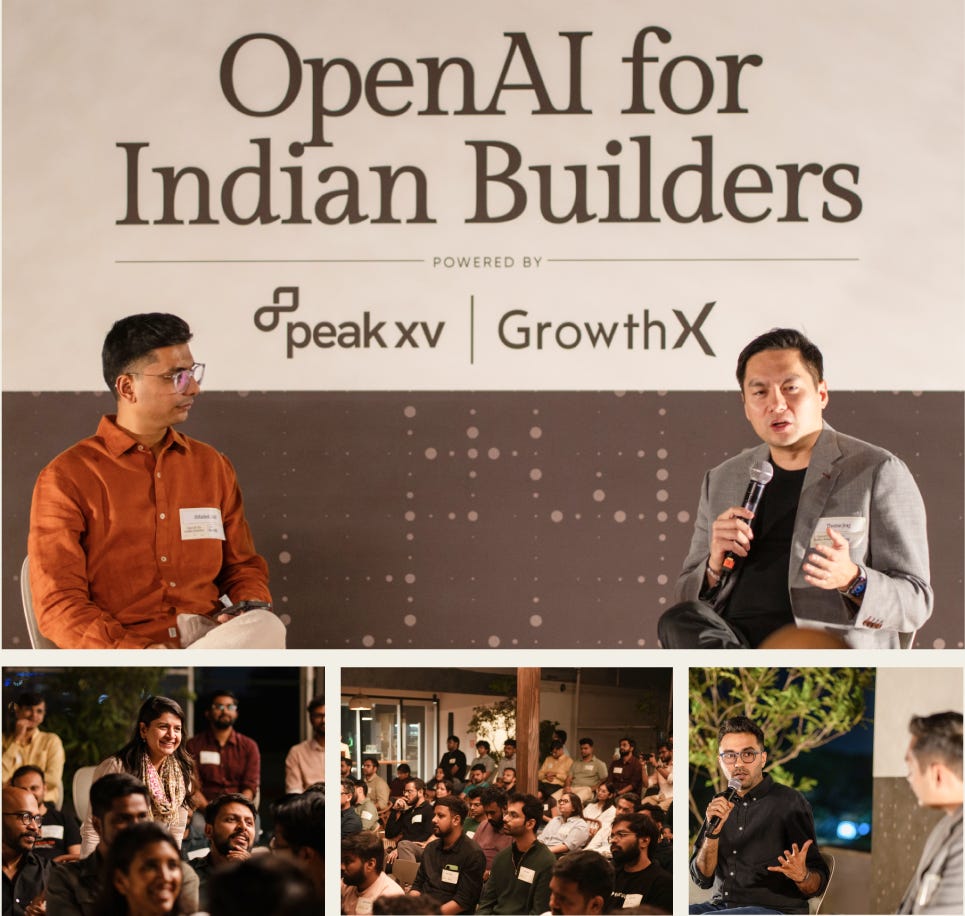
Thomas Jeng (Startups @ OpenAI) broke down how the OpenAI for Startups team is working with founders across APAC and answered many of your questions across 4 themes: AI for India, Infra, true product moats & the future.
What followed were meaningful 1:1 conversations with the India OpenAI team Pragya, Harshit, Arjun, Shreya & Sun Weiran. Sheer enthusiasm for building with OpenAI ❤️
Extremely grateful to our partners at Peak XV Partners for co-building the platform for Indian AI founders to get in front of foundational AI companies in the world. This is just the beginning. Become a member to get exclusive access to future events like this.
Today’s edition.
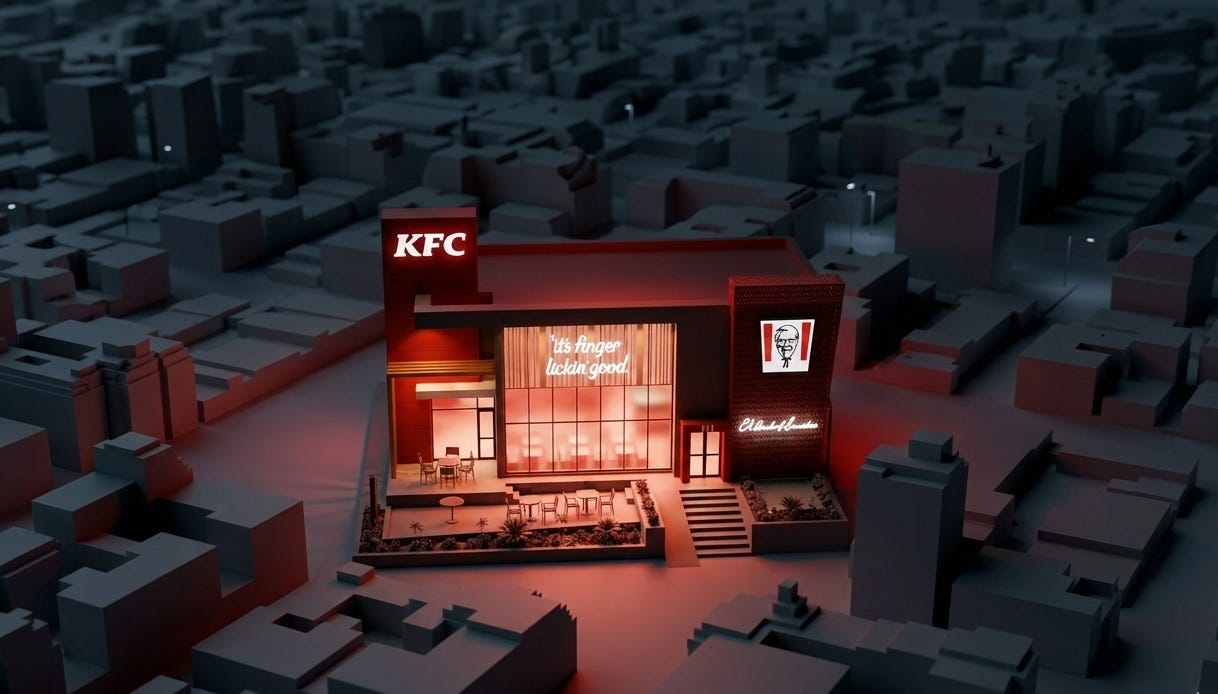
On 4th Feb, Devyani International, India’s largest KFC franchisee operator, published its Q3 2026 results. Same-store sales growth (SSSG) for KFC remained negative for ~2 consecutive years. Meaning, existing outlets are selling less than they did the year before.
That’s a massive downward trend from 2023, when KFC was one of the fastest-growing QSR brands. So, what happened? Did we collectively lose the appetite for a fried chicken burger?
Indians love fried chicken. A lot.
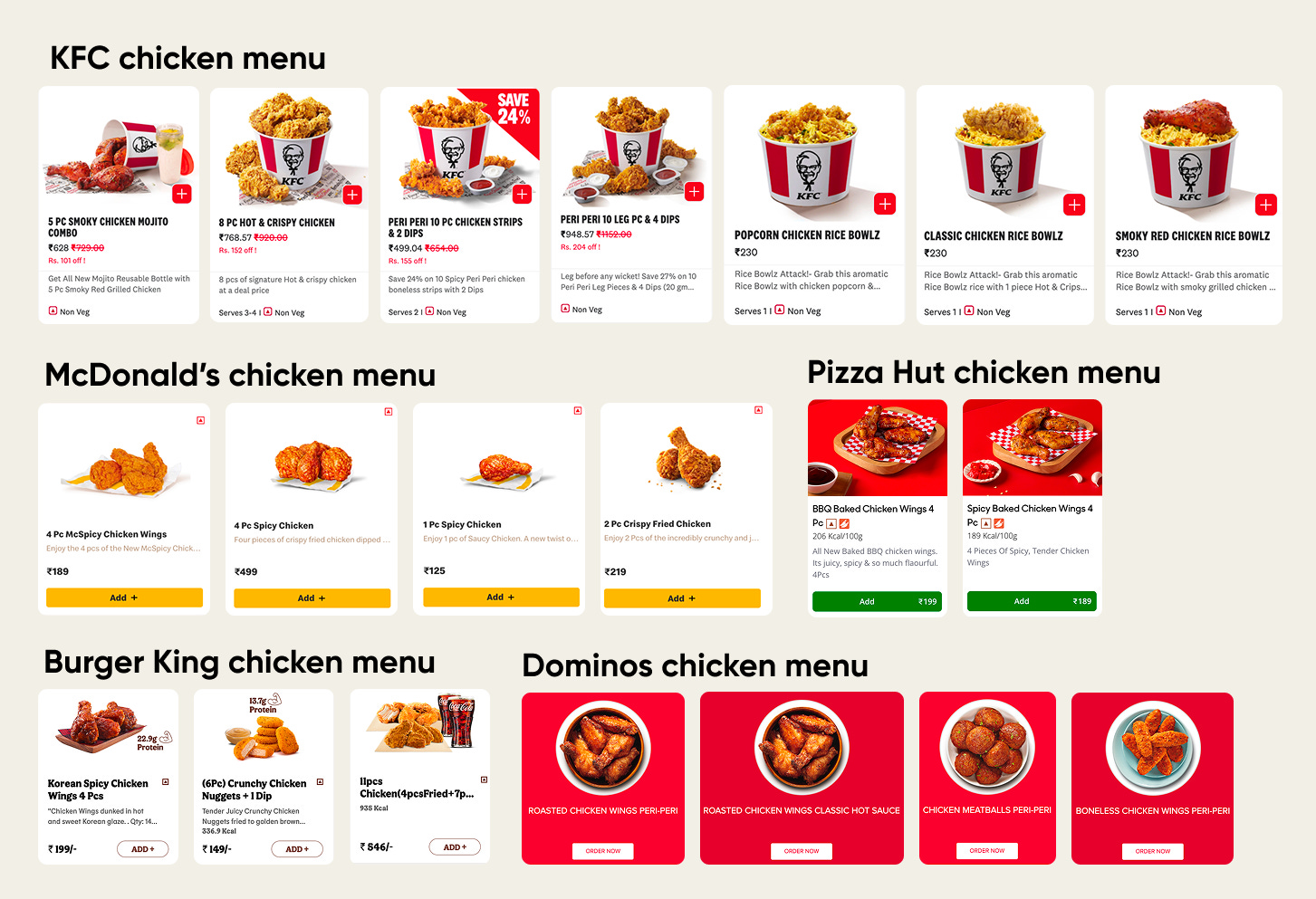
In fact, the demand has grown so much that QSR chains like Domino's have had to manage regional chicken supply shortages. The chicken sides menu has grown across QSRs, too.
It wasn’t always like this.
KFC entered India in 1996 with a simple thesis: what worked in America would work here. Hot, crispy, affordable fried chicken. The product was solid. The problem? Indians didn’t eat fried chicken back then — the taste wasn’t familiar, and early stores struggled.
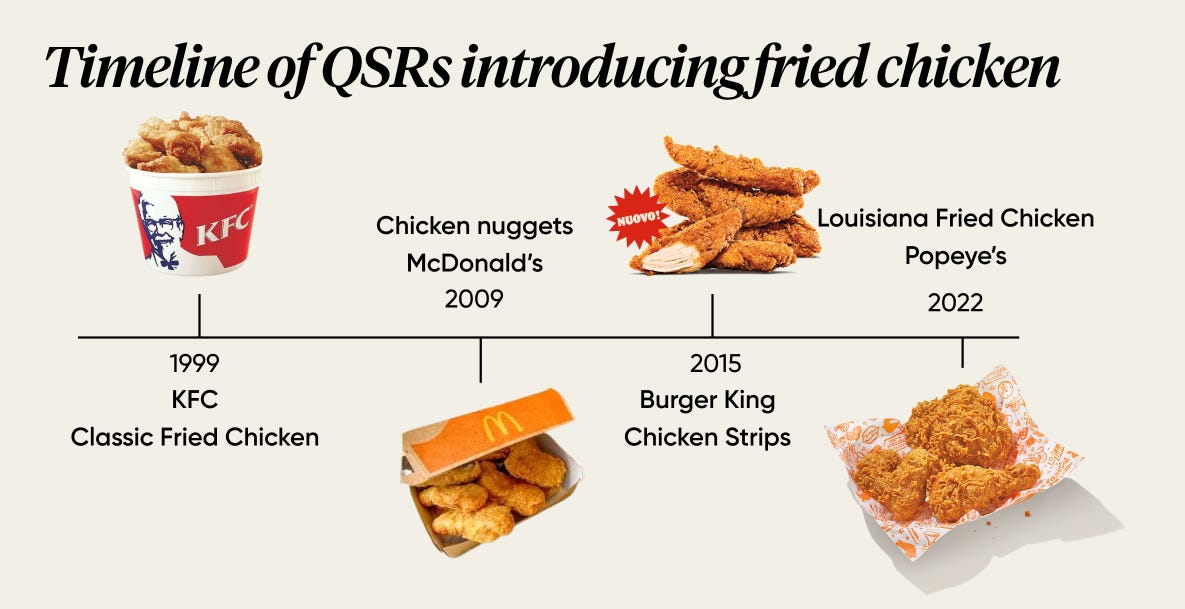
Post 1999, KFC launched products to better cater to Indians’ palates. This time, it entered the burger space as well, not just fried chicken.
Think about it. McDonald’s had already entered India with burgers and made it a widely accepted category. Penetrating this market with a fried chicken burger would be easier. Plus, you could always sell fried chicken as sides.
The strategy worked. Fried chicken gained popularity over the years. And KFC continued to maintain an edge above the other players.
The brand had three distinct advantages.
1. First mover advantage.
KFC entered the fried chicken market before anyone else. Over time, fried chicken became synonymous with KFC.
2. Product innovation.
Not just taste. The brand also launched value-focused offerings, such as larger chicken, rice, and biryani buckets — more entry points into the world of fried chicken.
3. An established supplier network.
KFC was selling fried chicken for ~10 years before its competitors caught up. This meant that they had the suppliers to pull off on-time deliveries even when chicken demand surged.
When the pandemic hit, KFC was perfectly positioned. More people began ordering online. And fried chicken held up well in the box. Result? The share of customers ordering from KFC nearly doubled between 2020 and 2021. The brand was untouchable.
So, what caused the slowdown?
KFC’s business model wasn’t keeping up.
See, the chain sits in the fast-food category for one reason — they’re competing on price. They need enough people to buy their food to turn a profit. In India, that means competing with street vendors for the snacking occasion.
KFC manages to pull it off by offering fries for ~₹70, a clean seat, and the same taste every visit. That combination justifies the slight premium and keeps people coming back.
Plus, the economics work out. Here’s what the unit economics look like for the average QSR with an average order value of ₹100 for reference.
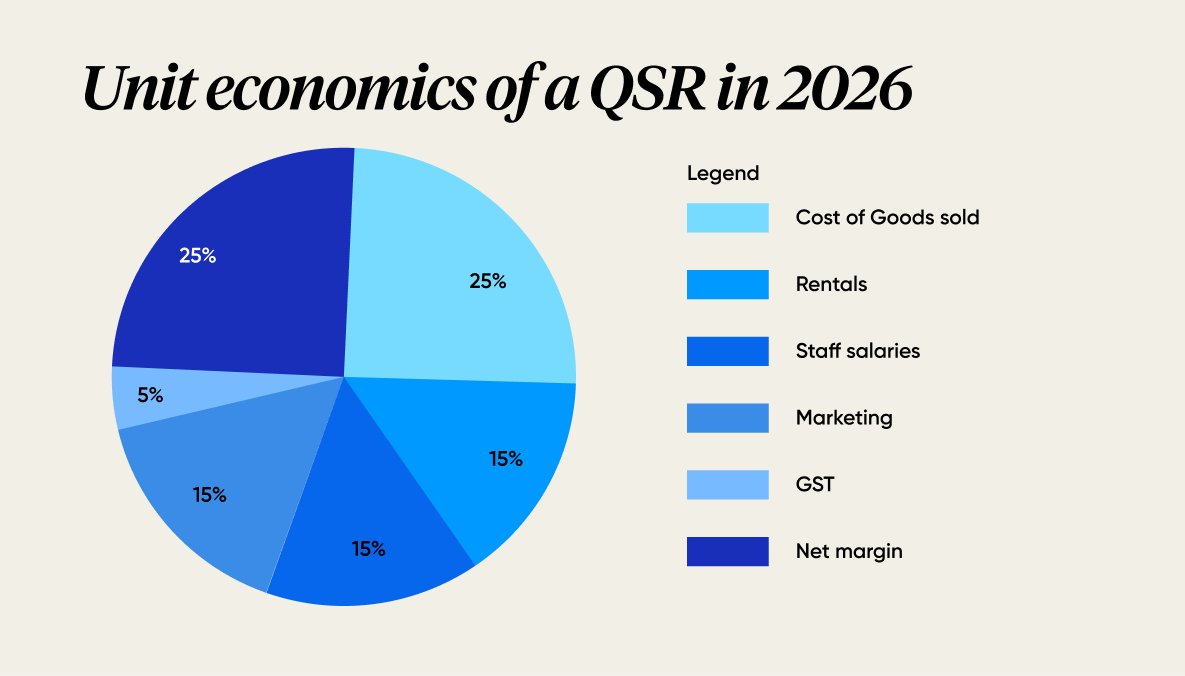
The problem? Nearly every fast-food brand follows the same playbook. And over the last few years, plenty of new players have emerged.
The curse of optionality.
Look at it from a customer’s POV. It’s Friday night, you’re ordering in, and you’re in the mood for a fried chicken burger. You open Swiggy, check KFC. Looks fine, but you want something new. You check McDonald’s, then Popeyes, then Wendy’s. Nothing catches your attention. Then you land on Leon’s, see an interesting Korean fried-chicken burger, and order. It’s delivered in 30 minutes. Same as a KFC burger.
This isn’t a one-off. International cuisines went from 10% of online food orders in 2018 to 40% today. Customers aren’t just hungry — they’re curious. And curiosity is hard to compete with.
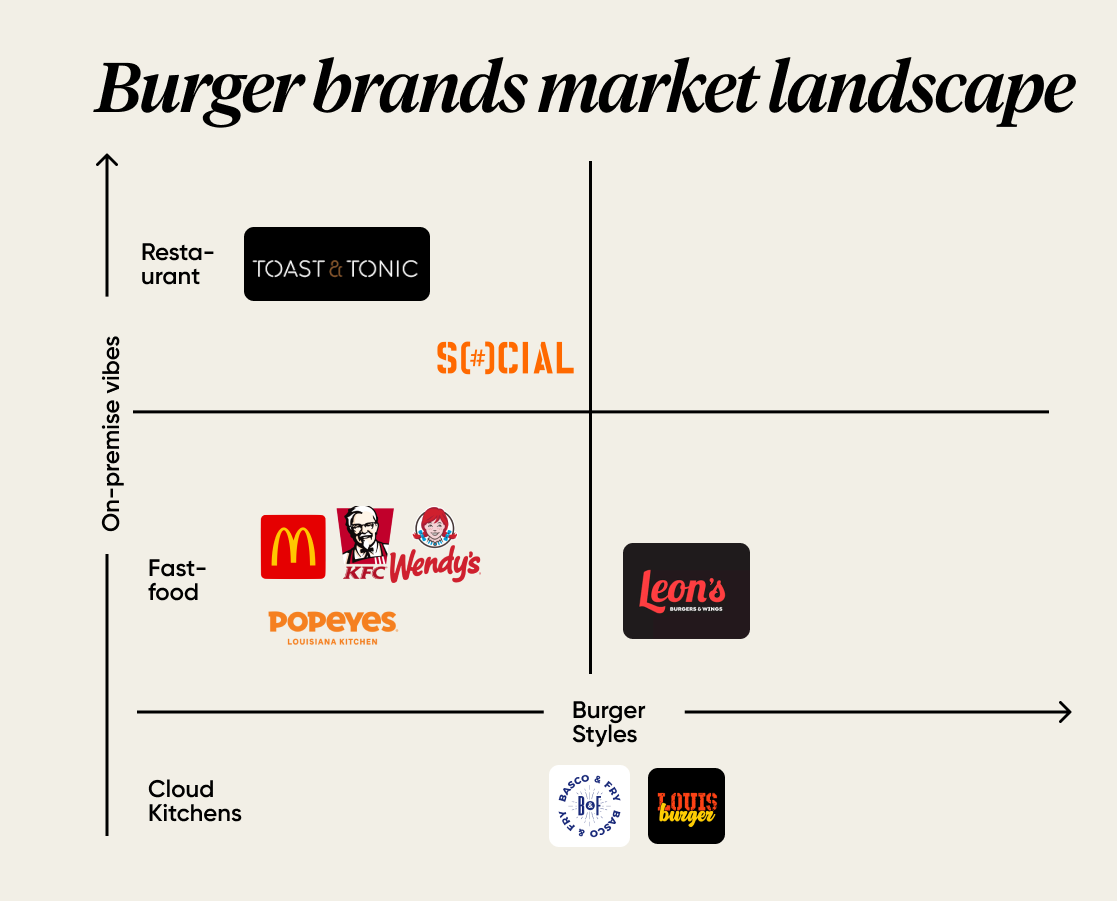
It plays out offline, too. Would you catch up with a friend at KFC or at a Social? The ambience, the menu variety, the experience — Social wins that decision almost every time.
Don’t get us wrong, KFC still has its loyalists. There’s a customer who wants KFC’s fried chicken specifically. But that base is narrower than it used to be, and optionality is quietly narrowing it further.
How is KFC winning customers now?
1. Aggressive Tier 2, Tier 3 expansion
Fried chicken doesn’t have a big presence in Tier 2 and Tier 3 cities yet. The aspirational demand is there, the competition is thinner, and the rent is cheaper. Plus, ~60% of India’s consumer demand still comes from here. That’s a huge expansion opportunity — one that’s sure to increase the chain’s average daily sales (ADS).
So far, the Devyani group has expanded KFC franchises to ~290 cities across the country. And it plans to add ~100 more each year to capture the market.
2. Product bundling
Currently, online orders account for the majority of KFC's order volume. Great for sales revenue, but terrible ROI for the outlet. KFC uses a dual bundling strategy to solve for this.
KFC still wants to drive online orders up. Hence, the ‘9 for ₹299’ combo, or the Mad Duo meal. Customers use the offer and buy an entire assortment of KFC products. Even the things they would otherwise skip.
In contrast, offline stores want to increase Same-Store Sales Growth (SSSG). So they launch outlet-exclusive offers that increase the average order value. Higher cart value per visit means more revenue from the same footfall.
3. Cost saver launches
While KFC offers value options, most are sides — fries, fried chicken, and small bites. Those looking for a meal don’t have many options.
To address this, KFC launched the Chana Chatpata Burger at ₹69 to attract value-conscious customers. It worked. Lower-priced items have picked up quickly. Lower-priced items have picked up quickly. So, KFC is doubling down on the value layer to keep transactions moving even when demand is soft.
4. Omni-channel engagement
KFC knows that it can’t compete solely on price. It needs to stay top of mind so that when a customer is hungry, KFC is the first place they think of. That means showing up everywhere.
On the digital front, KFC leans heavily into visibility on platforms like Swiggy and Zomato — banners, deep discounts, combo offers, and targeted consumer promotions. The idea is clear. Get the customer as close to a purchase as possible, and give them a reason to complete it.
While offline, the focus is on the in-store experience. That means refreshing the interiors, improving staff training, and adding kiosks for smoother checkouts to give customers a reason to keep coming back.
Will these tactics save KFC?
KFC’s same-store sales growth has shown marginal improvement this quarter. That’s a positive signal that these tactics are beginning to land. Whether they’re enough to reverse a multi-year trend is a different question. We’ll be watching.